

Lisbon · Included with the card
Palácio Nacional da Ajuda (Ajuda National Palace)
The Palácio Nacional da Ajuda holds Portugal's Crown Jewels in a vault three floors high. It was the royal family's official residence until the monarchy fell in 1910, and its rooms, from the royal apartments to the Throne Room, keep their 19th-century look. The palace and its Royal Treasure Museum are both included in the Lisboa Card.
Before you go
- Time inside2 h
- ClosedWednesday


The royal rooms of the Palácio Nacional da Ajuda
The palace route covers two floors, the rooms where the family lived and then the ones where it received. By the national museums’ own account, it’s the only palace in Lisbon you can visit that still looks as it did in the 19th century.
The route through the palace
- Ground floor
- Music Room, Blue Room, Marble Room, the Queen's Bedroom, Dining Room
- Upper floor
- Throne Room, João VI Room, Banqueting Hall, Chinese Room, the King's last rooms
Downstairs, the Dining Room is neo-Renaissance, from the 1880s, with woodwork by the carver Leandro Braga. Next to it, A Mesa Real (the royal table) shows what went on behind royal meals from 1862 to 1910.
You see the pantry and the scullery where the dishes were washed, the silver and cutlery, and the table from the royal yacht Sirius.
The Throne Room and the state rooms

Upstairs are the rooms where the family received guests, and they still do that job: the President of Portugal holds official ceremonies here.

After the state rooms come the King’s last rooms, five rooms on the west side made in the final year of the life of Luís I, king from 1861 to 1889. Since August 2026, his portrait by the painter Miguel Ângelo Lupi, from 1868, has hung there.
The neo-Gothic painting studio

The palace also has a neo-Gothic wooden studio, carved by the same Leandro Braga, where King Luís I and Queen Maria Pia painted and sculpted with their sons, Carlos and Afonso. The palace director says it’s a favourite with visitors.
Beyond the rooms themselves, the palace’s collections run from silver, tapestry and furniture to glass and ceramics, and include paintings by El Greco, the French painter Géricault and the Italian Moroni.
The Royal Treasure Museum at the Ajuda palace
The Royal Treasure Museum opened in 2022 in the palace’s west wing, inside a vault three floors high. More than a thousand pieces are on show in eleven sections, starting with gold and diamonds from Brazil and ending with the journeys the treasure itself has made.

Halfway round come the jewels and the orders of chivalry, then the royal insignia: the crown, the sceptres and two royal mantles. Two golden roses sent by popes are on show too.

Then comes the Germain silver, a table service ordered from the French silversmith François-Thomas Germain after the 1755 earthquake destroyed much of Lisbon. Visit Lisboa, the city’s tourist board, calls it the only complete one in the world.
Tickets for the Ajuda palace and the Treasure
The palace and the Royal Treasure Museum sell separate tickets, and the Lisboa Card includes both, with nothing to book.
- Palace
- Thursday to Tuesday, 10:00–18:00, last admission 17:15
- Palace closed
- Wednesdays, 1 January, Easter Sunday, 1 May, 13 June, 25 December
- Royal Treasure Museum
- Every day, 10:00–18:00 from October to April and 10:00–19:00 from May to September; last admission an hour before closing
- Treasure closed
- 25 December and 1 January
- Children
- Free up to 12 at the palace, up to 6 at the Treasure
Without the card, it’s €15 for the palace and €11 for the Treasure, and a 24-hour Lisboa Card is €31.
The palace ticket is half price for over-65s and ages 13 to 24. At the Treasure, ages 7 to 24 and over-65s pay €7.50, and a family of two adults and two young people pays €35. Residents of Portugal get 52 free days a year at the palace; visitors don’t.
Watch the clock in winter. From October to April the Treasure’s last admission is 17:00, a quarter of an hour before the palace’s, so on a late start do the Treasure first. On Wednesdays, when the palace is shut, the Treasure stays open.
The palace puts its own route at about an hour and three quarters, and one visitor did the Treasure in about half an hour.


Security at the Treasure works like an airport’s: you go through X-ray gates one at a time, and turnstiles read the QR code on your ticket, so keep it until you’re out. Visitors say even small bags go in coin lockers, and you get the coin back.
At the palace, belongings go in the lockers or the cloakroom, umbrellas and helmets included. There’s a ramp at the entrance and a lift, though the route has two staircases.
The palace has stayed open through a restoration paid for by Portugal’s EU recovery plan, due to finish by the end of 2026, so a room or two may be shut. It also warns of occasional closures for events and upkeep.
The Ajuda palace and King Luís I
The royal family made the palace its official residence in 1861, when Luís I came to the throne, and stayed until the monarchy fell in 1910 and Portugal became a republic.
His sons were born here: Carlos, the future king, in 1863, and Afonso in 1865. The Council of State met here too.
Three of the palace’s treasure rooms were locked when Luís I died in 1889 and have stayed shut ever since. Once the restoration ends, they’re due to open as storerooms you can visit.
Down from the Ajuda palace to Belém
The palace sits on the hill above Belém, at the top of the Calçada da Ajuda, and one visitor called the walk up from the river a rough uphill hike.
Tram 18 and buses 729 and 732 run up that street, and buses 711, 742 and 760 stop on the Largo da Ajuda out front, all on the Lisboa Card. Ride up, then walk down.
Down the hill to Belém
-
 Jerónimos Monastery → Down in Belém. Book its cloister slot ahead; it shuts on Mondays, which the palace doesn't.
€19.50 -
 Monument to the Discoveries → Over the road and the railway from the monastery. Open every day, Mondays too.
€10 -
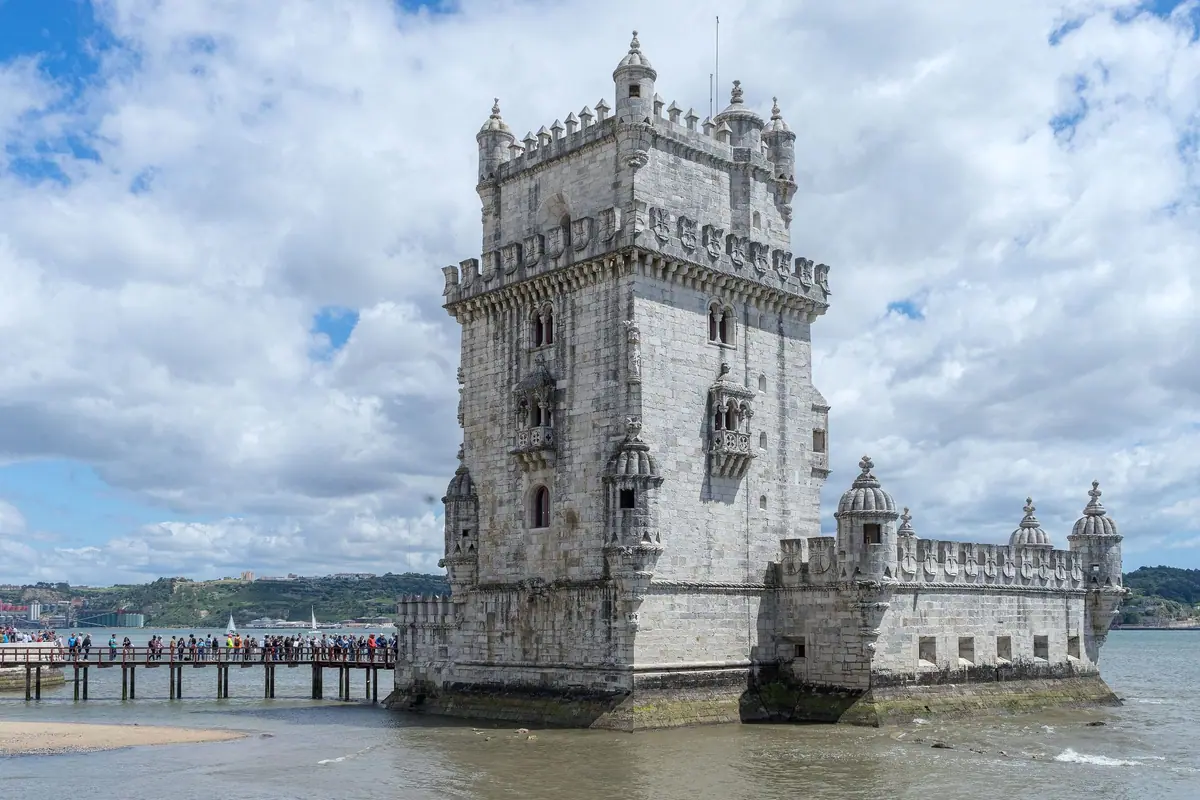 Belém Tower → Further west on the river, a 20-minute walk from the monastery. Its time slot is separate from the cloister's, so leave room between them.
€16.80
Card and combos
Lisboa Card options
Pick the one that fits your trip. Prices are per adult, and you choose your dates on the next page.


Tickets
Popular tickets around Lisbon
The ones other visitors book most.


