

Porto
Port Wine Cellar Tours in Gaia (caves do vinho do Porto)
A port wine tour takes you into Gaia's old lodges, a short walk over the bridge from Porto. They line the river with their names up on the roofs, and inside you pass giant vats and rows of casks on the way to the tasting. Some houses add fado, and one visit is included in the Porto Explorer Pass.
Before you go
- Time inside1–1.5 h
- Weekly closingNone


Which port wine cellar to visit in Gaia
Each house runs its own visit, so you’re choosing a house and a style: a guide or an audio tour, two ports or four, with fado or without.
| Lodge | The visit | Tasting | From |
|---|---|---|---|
| Burmester | Guided, 50 min, booking only | A port tasting | Explorer Pass |
| Cálem | Museum and guided tour, 1 h | 2 or 3 ports | €22 |
| Sandeman | Guided, 50 min | 3 ports | — |
| Ferreira | Guided, 50 min | 3 ports | — |
| Fonseca | Audio tour at your own pace | 3 ports | €16 |
| Taylor's | Audio tour on your phone, 1 h 30 | 3 ports | €25 |
| Cockburn's | Guided, 1 h 30, booking only | 3 ports | €30 |
| Graham's | Guided, 2 h, booking only | 3 ports with food, or 4 premium ports | €40 |
| Poças | Guided, 1 h 30 with tasting | 3 wines | €23 |
Burmester is the one in a Porto pass. Cálem and Fonseca add fado in the evening, Taylor’s and Fonseca let you go round at your own pace, and Graham’s has the view from the top of the hill.
Burmester, the port cellar in the Porto Explorer Pass

Come off the lower deck of the bridge and Burmester is right there, on Largo Dom Luís I, beside the bridge’s stone pier.

Its guided visit takes 50 minutes, through a long warehouse of casks and old giant tuns, and ends with a tasting.
With the Porto Explorer Pass you also get two days on the hop-on hop-off bus and an hour on the river in a rabelo, the Douro’s old wine boat. Porto Cathedral and a fado show at Fado Maior complete it.
Every visit at Burmester is booked ahead, including the one in the pass: you ring the lodge or stop at its reception and pick a time. It’s open from 10:00 to 19:00, with a break from 13:00 to 14:00.

Porto Explorer Pass
Catedral do Porto · 48-Hr Hop-on Hop-off Bus + River Cruise + Wine Cellar · Fado Maior do Porto
Saves you €3.40 on the tickets one by one
Cálem port cellars, with a museum on how port is made

Three minutes further along the riverfront, on Avenida de Diogo Leite, Cálem starts its visit in a small interactive museum. A guide then takes you through the cellars to the tasting, in about an hour.
Tours start every 20 minutes, in English, French, Spanish or Portuguese. The basic tasting is a white port and a reserve tawny, the amber port aged in casks; the premium pours three, up to a 10-year-old tawny.
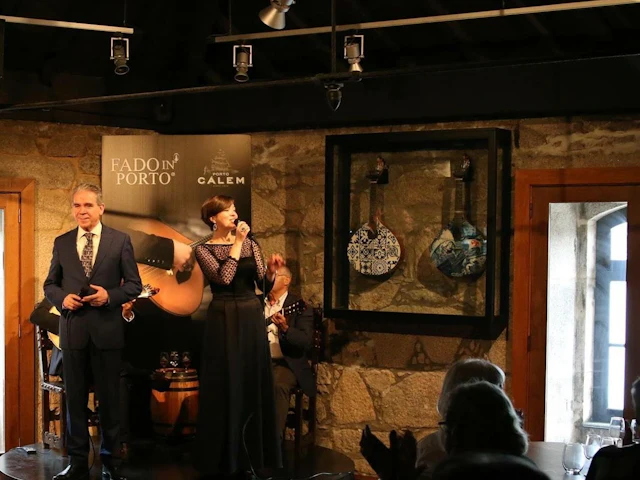
At 18:15 there’s an evening version with fado, the Portuguese song of longing: a guided visit, a glass of white port and one of red, and the show, in English.
One visitor’s tip from July 2026: keep your ticket, because you need it for the tasting and again on the way out.

Sandeman port cellars, under the caped Don

Two minutes on, the black figure in a cape and a wide hat on the roof is the Don, Sandeman’s emblem. Sandeman has aged port in this building since 1811.
The standard visit is 50 minutes between rows of vats and casks, led by “the Don”, and you finish with a white, a ruby and a tawny. Longer visits go as far as old tawnies of 10, 20, 30 and 40 years.
Sandeman sells its visits itself, so there’s no ticket for it on this site. It’s open every day, with a lunch break from 12:30 to 14:00.
Ramos Pinto, a port house on the riverfront

Further along the riverside avenue, the yellow lodge with the double staircase is Ramos Pinto, a house founded in 1880 by Adriano Ramos Pinto. Its visitor centre includes a museum, with the house’s collection of Belle Époque posters.
The visit takes in the museum and the cellars in 30 to 40 minutes, at set times, in English, French, Spanish or Portuguese.
Ferreira, the Portuguese house among the port lodges
Ferreira is a Portuguese house in a trade full of British names, started in 1751 by a family of Douro growers. Its lodge is on the same avenue, about 12 minutes’ walk from the bridge.
The visit begins in the house of Dona Antónia Adelaide Ferreira, the 19th-century widow who ran the family business and its Douro estates. From there it crosses a long warehouse of vats and casks, a museum of vintage port and the garden, and ends with three ports.
Ferreira and Sandeman belong to the same wine group, Sogrape, and Ferreira also closes for lunch from 12:30 to 14:00. The basic visit takes 50 minutes.
Fonseca port cellar: an audio tour, or fado at six
From the quay, the next lodges are up the hill. Fonseca is about ten minutes from the bridge, on Rua do Choupelo, and you walk its cellar at your own pace with an audio guide.
The tasting is in the old tasting room, with three ports: Bin No. 27, Siroco and Terra Prima. On the way there’s an aroma test, and children get biscuits and grape juice.
The audio tour runs every day from 11:00, with the last entry at 17:45. At 18:00 there’s a guided visit instead, with a fado show and a tasting, about an hour and a half in all.
There’s also a fado evening with dinner. Both evening visits need booking by 15:00 on the day.


Taylor’s port cellars, further up Rua do Choupelo

Taylor’s cellars are 300 years old, and the house has renovated them and added a museum route. They’re a couple of minutes higher up the same street.
You go round on your own, with an audio guide in 13 languages that plays on your phone from a QR code, so bring earphones. The tasting is a Chip Dry, an extra-dry white port, then a late bottled vintage (a single year’s wine, bottled in its fourth to sixth year) and a 10-year-old tawny.
Allow about an hour and a half. The cellars open every day from 10:00 to 18:15. The visit also comes as a combined ticket with WOW, a set of museums in Gaia, among them one on port and wine.


Cockburn’s port cellar and its coopers
Cockburn’s, one of the old British port houses, says it has the biggest wooden port cellar in Gaia. It’s up the hill again, about 16 minutes from the bridge on Rua Serpa Pinto.
Its coopers, the craftsmen who make and mend the casks, still work there from Monday to Friday. The guided visit lasts an hour and a half and ends with three ports.
Cockburn’s only takes guests who’ve booked, all year. For rarer wines, a second ticket takes you to a private room with a turntable and LPs, books and old portraits, to taste vintage ports and aged tawnies.


Graham’s port lodge, at the top of the hill

Graham’s is the climb, about 23 minutes on foot from the bridge. What you get for it is the view over the river to the Ribeira, which the Vinum restaurant next door shares.
The 1890 Lodge is where all of Graham’s port ages, and a port specialist guides the two-hour visit, in English only. One ticket gives you three ports with cheese, chocolate and a pastel de nata, Portugal’s custard tart. The other gives four premium ports, without food.
Visits are by booking only, and the tickets here run at 10:30 and 15:30, plus 11:30 on some days.


Poças port cellars, away from the riverfront

Poças, a Portuguese house founded in 1918, is the one lodge here away from the river, about 27 minutes on foot from the bridge. The visit takes about an hour and a half with the tasting, and the guide speaks English, French, Italian, Spanish or Portuguese.
You pick the tasting: three ports, two Douro table wines and a port, or a port with a pastel de nata. The visit is wheelchair-accessible, and you can cancel up to 24 hours before.

What you taste on a port wine tour
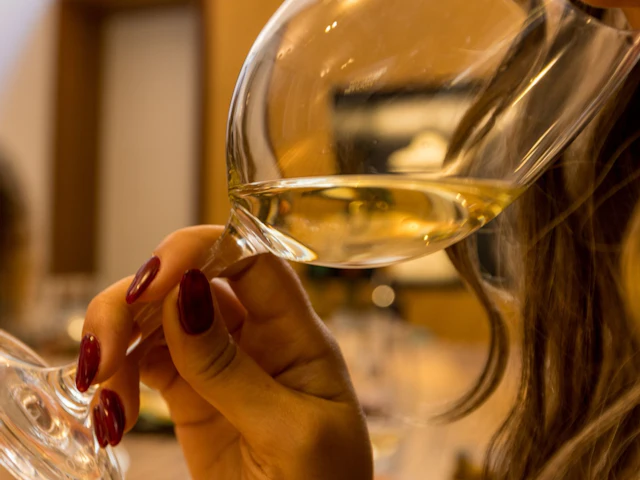
Port is made only from grapes grown in the Douro valley, upriver, and fortified with grape brandy, which stops the fermentation and keeps some of the sugar. Each tasting picks from its styles, and these are the names you’ll hear:
Port styles
- White
- Made from white grapes, from dry to sweet
- Ruby
- The young, fruity red style
- Tawny
- Aged in wooden casks and blended from several years; 10, 20, 30 or 40 on the label is the average age
- Late bottled vintage
- Wine from a single year, bottled between its fourth and sixth year
- Colheita
- A tawny from a single year, with at least seven years in wood
- Vintage
- Wine from one declared year, bottled young to age in the bottle

Tawny is the style you see ageing in the casks. The years in wood give it its amber colour and its notes of dried fruit and toffee.
How the port wine lodges came to Gaia

Port’s first boom came out of a war. England fought France from 1688 to 1697 and stopped buying French goods, so its merchants looked to the Douro. The Methuen Treaty of 1703 then let Portuguese wine in on easier terms.
Those merchants moved into the trade themselves, which is why so many lodges carry British names: Cockburn’s, Graham’s, Sandeman and Taylor’s among them.
Then, in 1756, the Marquis of Pombal, the king’s chief minister, set up a company to control the trade. Over the next few years the Douro vineyards were marked out by law.
Gaia’s turn came in 1926, when a law made it the official warehouse of the Douro: port had to be stored here, and only here, before it was sold. Direct sales from the valley were allowed only in 1986.
For centuries the wine came down the river in rabelos, flat-bottomed boats loaded with casks, until 1964, when work began on the Carrapatelo dam and trains, then tanker lorries, took over.
Getting to the port wine cellars in Gaia
From the Ribeira you cross the river on the bridge’s lower deck, and Cálem is about 200 metres from the far end. The houses up the hill, from Fonseca to Graham’s, are 10 to 23 minutes on foot, with a climb.
- Metro
- Line D over the top deck to Jardim do Morro, then about 7 minutes down to the river
- Cable car
- Between the Gaia quay and Jardim do Morro: €7 one way, €10 return
- Cable car hours
- 10:00–18:00 every day until 31 December; closed on Christmas Day

The cable car is the easy way back up after the tasting: it lifts you from the quay to Jardim do Morro, beside the top deck of the bridge.
After the port wine cellars: over the top deck to the Ribeira
From Jardim do Morro, the walk back to Porto is over the top of the bridge.
Back over the river
-
 Dom Luís I Bridge → Cross on the top deck, beside the metro, with the Ribeira's rooftops far below.
-
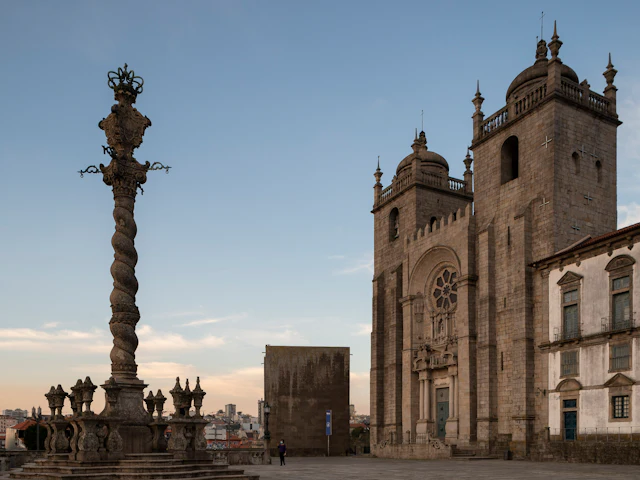
 Porto Cathedral → Just past the Porto end of the top deck, for the cloister and the tower.
€4 -
 Douro River Cruise → Down on the Ribeira quay, 50 minutes on the Douro in a rabelo, the kind of boat that brought the port down.
€20
City passes
Porto city passes
Pick the one that fits your trip. Prices are per adult, and you choose your dates on the next page.


Tickets
Popular tickets around Porto
The ones other visitors book most.


