
Porto
Church of São Francisco (Igreja de São Francisco)
The Church of São Francisco looks like a plain Gothic church from the street. Inside, it holds one of Portugal's richest displays of gilded woodcarving, enough for a 19th-century visitor to call it a church of gold. Its Tree of Jesse is a family tree of Christ in gilded kings, and the museum next door takes in the catacombs.
The gilded church of São Francisco
Nothing outside gives it away. The church is Gothic, with three aisles under stone arches, and the gilded carving went in from the 17th century to the mid-18th. The Third Order of St Francis, the lay brotherhood that runs the church, points to the contrast between the gold and the sober Gothic stone.
The gilded nave and the Tree of Jesse

By the door are two pieces older than the gold. On the left is a wall painting of Our Lady of the Rose, credited to António de Florentim and one of the oldest left in the country. On the right stands a 13th-century St Francis, carved in painted granite.
From there the gold takes over. Altarpieces by several master carvers line the aisles, among them the one to Our Lady of Help, from 1740, and the high altar closes the view at the far end.
Then walk up to the Tree of Jesse, which the Order counts among the most exuberant in Portugal. The twelve kings of Judah rise out of the body of Jesse, King David’s father, branch by branch, up to the Virgin and Child.
The carvers Filipe da Silva and António Gomes made it in the 18th century, reworking an older piece. In the niches either side stand St Anne and St Joachim, the Virgin’s parents, with four Franciscan scholars.
São Francisco’s museum, catacombs and Third Order church
Two more buildings share the visit. The Third Order church, next to the main one, is from a different century: neoclassical, begun in 1792, with statues of Humility, Penance, Hope, Charity and Faith across its two-storey front.
The museum route starts next door to the main church, in the Casa do Despacho, the Order’s house. Nicolau Nasoni, the Italian behind the Clérigos Tower, designed it, and it was finished in 1749.
The Sessions Room

Upstairs are the Treasury Room and the Sessions Room, with an octagonal coffered ceiling and an altar of Christ on the Cross credited to José Teixeira Guimarães.
The catacombs

The route also takes in the catacombs, where the Order buried its benefactors from 1749 to 1866, in niches numbered along the walls. The ossuary still holds thousands of bones, and visitors say some of them can be seen through a glass floor.
Church of São Francisco tickets and opening hours
There’s a charge to go in, paid at the church’s own desk. Visitors describe one ticket for the church, the museum route and the Third Order church, and the Order lists all three with a single ticket office.
Adults pay €12, according to visitors between April and September 2026. The Order doesn’t publish its prices, and no Porto pass includes the church.
- April to September
- Every day, 9:00–20:00
- October to March
- Every day, 9:00–19:00
- Closed
- 25 December
- Entrance
- Rua do Infante D. Henrique, next to the Bolsa
Leave the camera in your bag: visitors throughout 2026 report that photos aren’t allowed in the church, though the Order’s site says nothing about it.
A reviewer who went in April found it quieter first thing. The church also hosts a season of concerts run by the Order.
What the 1832 fire left of São Francisco
The Franciscan friars began the church in the 14th century, as part of their convent by the river. On the night of 24 July 1832, during the Siege of Porto, fire destroyed almost all of the convent and spared only the church.
In 1842 the ruins went to Porto’s merchants, a gift from Queen Maria II. They built the Palácio da Bolsa on them, so the palace and the church now stand side by side. The Third Order still runs the church today.
A Ribeira morning from the Church of São Francisco
From São Bento station it’s about 11 minutes down to the church, on Rua do Infante D. Henrique. Tram 1, Porto’s old riverside tram, leaves from the Infante stop by the church and follows the Douro to Passeio Alegre, near the sea at Foz.
Along the river
-
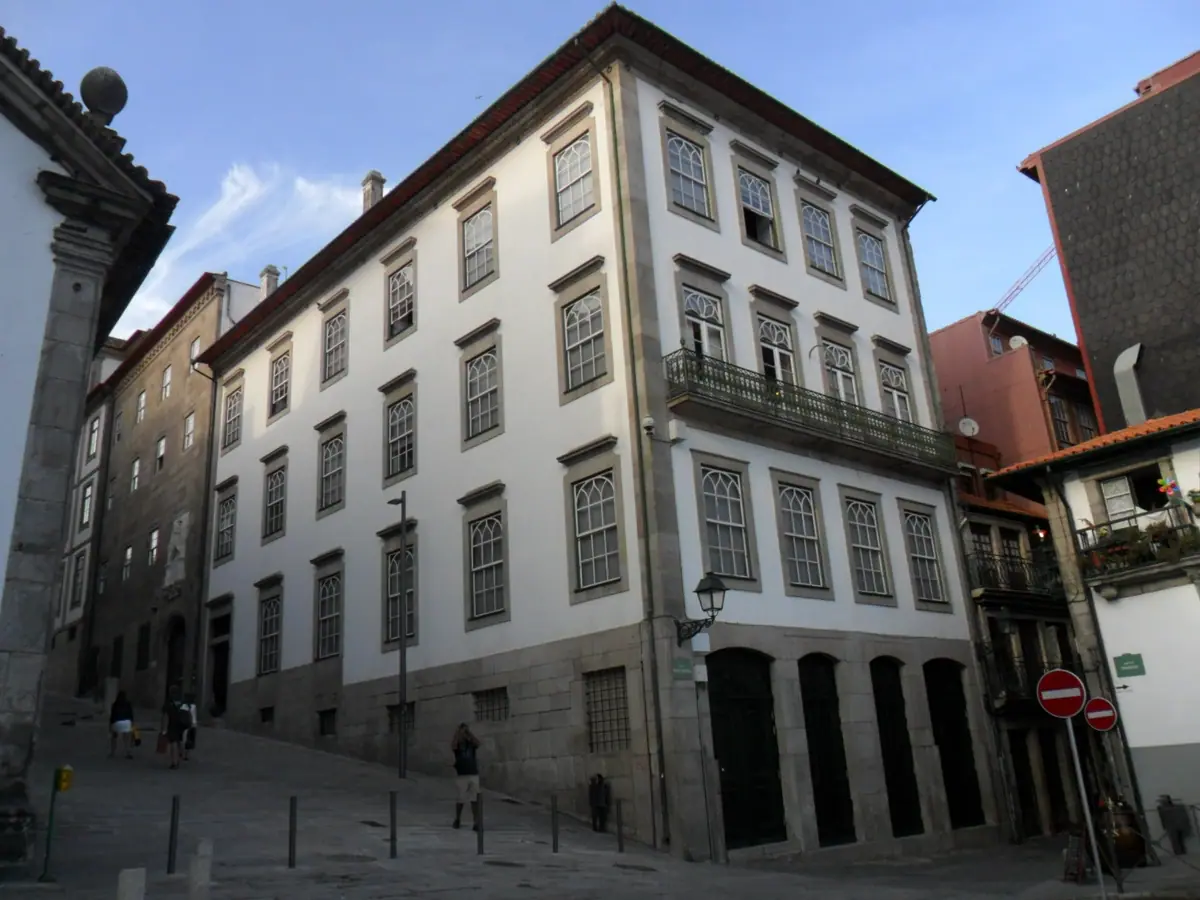 Casa do Infante → Three minutes away, the house where, tradition says, Henry the Navigator was born. €4
-
 Douro River Cruise → Six minutes down on the quay. The Six Bridges cruise goes out in a restored rabelo, one of the old port wine boats.
€20 -
 Port Wine Cellars → Across the river on the lower deck of the bridge, for a tasting in one of the port wine lodges.
€22
City passes
Porto city passes
Pick the one that fits your trip. Prices are per adult, and you choose your dates on the next page.


Tickets
Popular tickets around Porto
The ones other visitors book most.


