Lisbon · Included with the card
National Pantheon (Panteão Nacional)
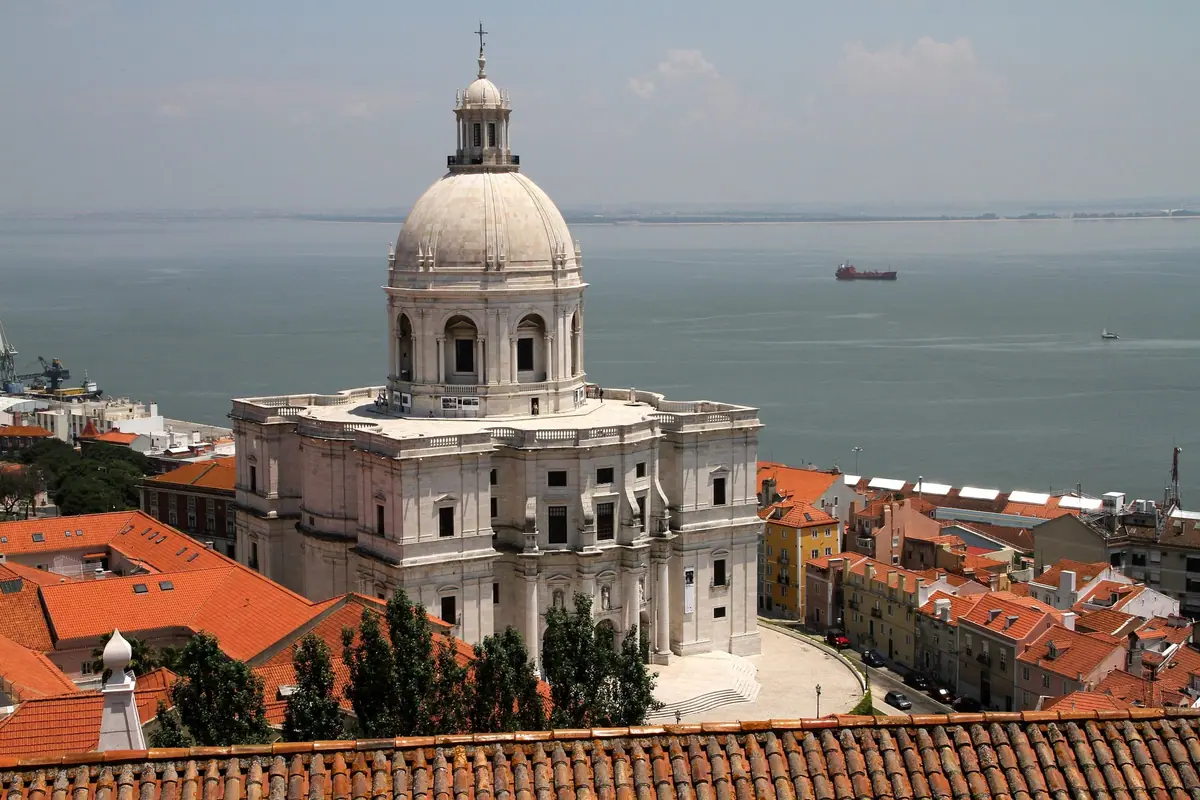
The National Pantheon in Lisbon keeps Portugal's heroes under a baroque dome that took 284 years to finish. Amália Rodrigues, the queen of fado, is buried here, and so is Eusébio, the country's football star of the 1966 World Cup. Up on the terrace, Alfama and the Tagus lie at your feet, and your Lisboa Card covers the lot.
Before you go
- Time inside1–1.5 h
- ClosedMonday


The National Pantheon’s marble nave, cenotaphs and terrace
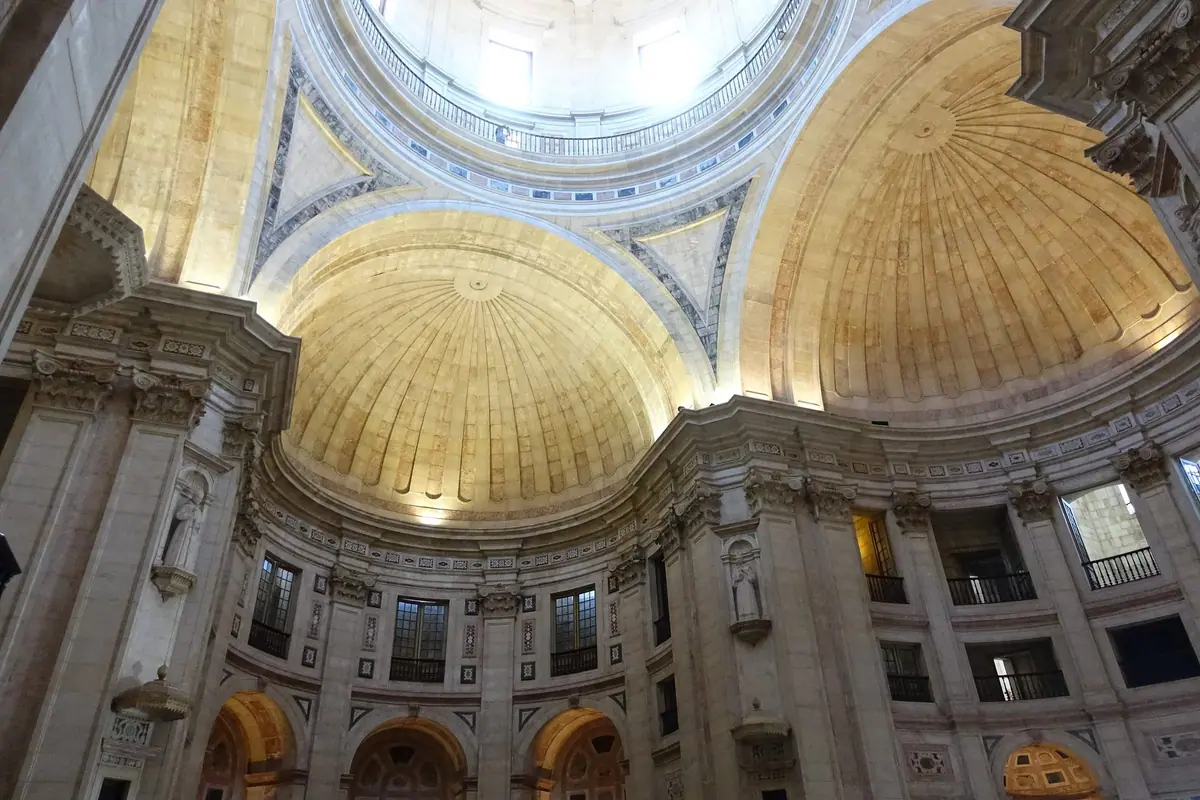
Walk in and you’re standing in one vast space of coloured marble, with the dome high above and Portugal’s honoured dead around the edges. Keep some energy for the end, though, because the best view in the building is outside, up on the terrace.
The nave under the dome
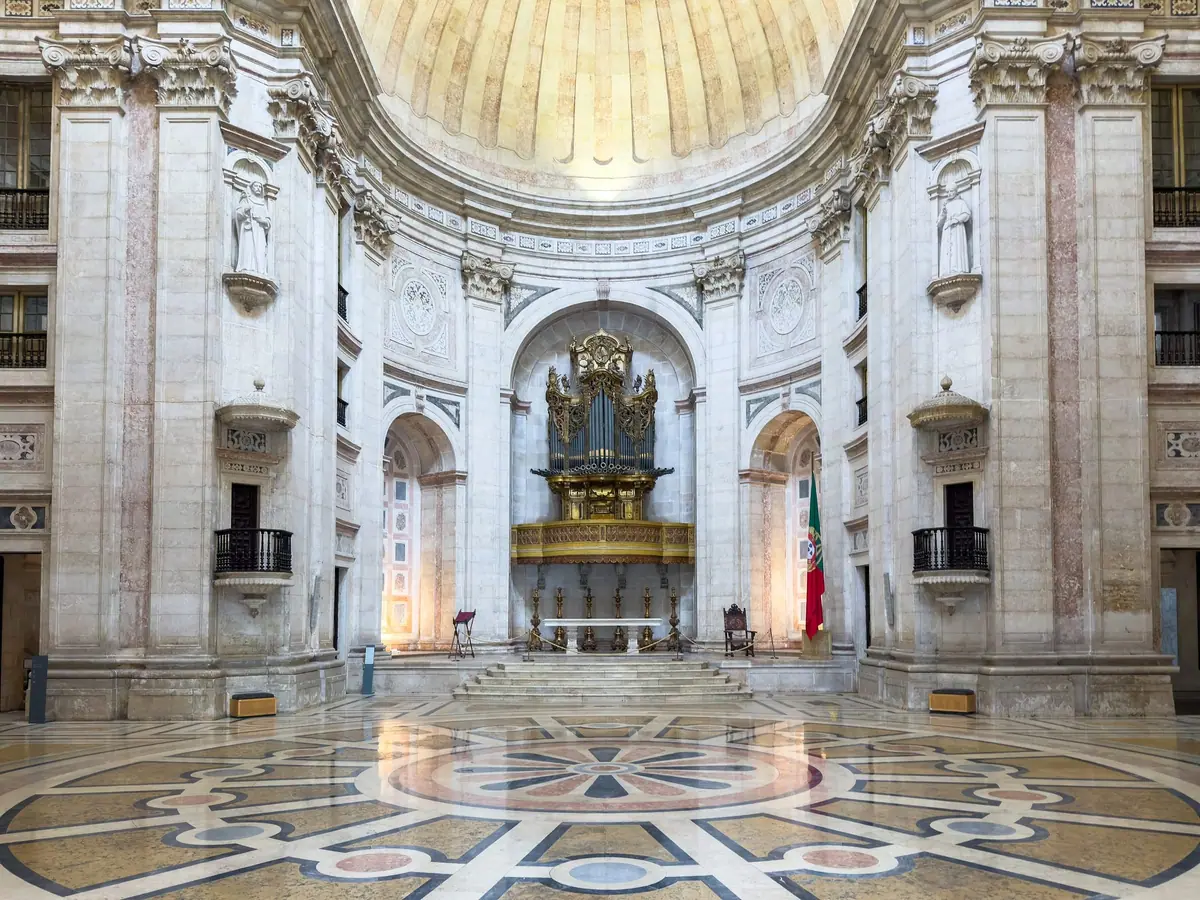
The plan is a Greek cross: four equal arms, like a plus sign, joined by curving walls, with a tower in each corner. The architect João Antunes broke with the church plans Portugal was used to.
Those wavy inner walls were the first attempt at anything like them in the country. The nave is lined with coloured marble, and the dome rises to 80 metres.
At the high altar stands an 18th-century organ. Higher up, the upper choir is built like an amphitheatre and looks out over the nave and the half-domes.
Six cenotaphs for Portugal’s national heroes
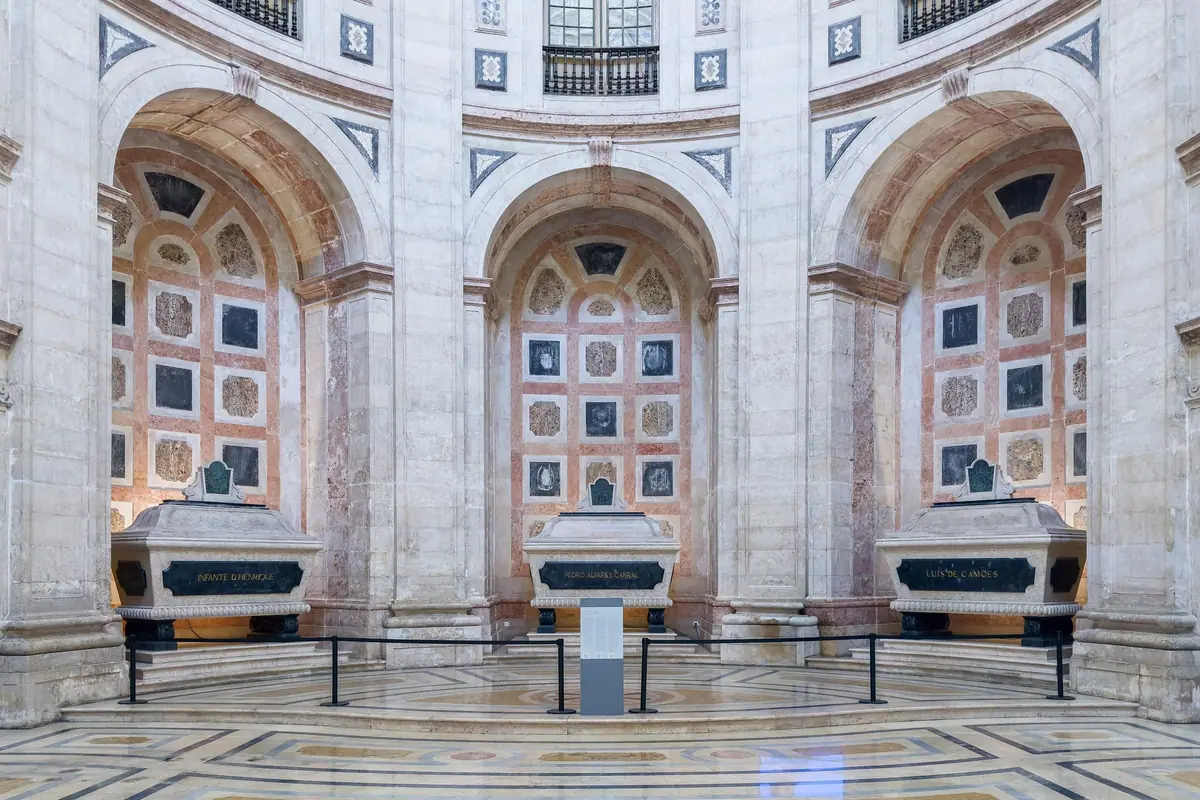
Around the nave stand six cenotaphs, monuments shaped like tombs with nobody inside. They honour mostly the men who led Portugal’s age of discovery, when its ships found the sea route to India and reached Brazil.
Henry the Navigator, the prince at the centre of those voyages, has one. So does Vasco da Gama, who opened the first sea route from Europe to India, and Pedro Álvares Cabral, whose fleet reached Brazil in 1500.
Next to them are Luís de Camões, the poet of The Lusiads, and Afonso de Albuquerque, the second viceroy of Portuguese India. The sixth is Nuno Álvares Pereira, the constable, or commander-in-chief, who won Portugal’s battles in the succession crisis of 1383–85.
As for Gama and Camões, their actual tombs are at the Jerónimos Monastery in Belém; the cenotaphs here are the nation’s tribute.
The terrace, 40 metres up
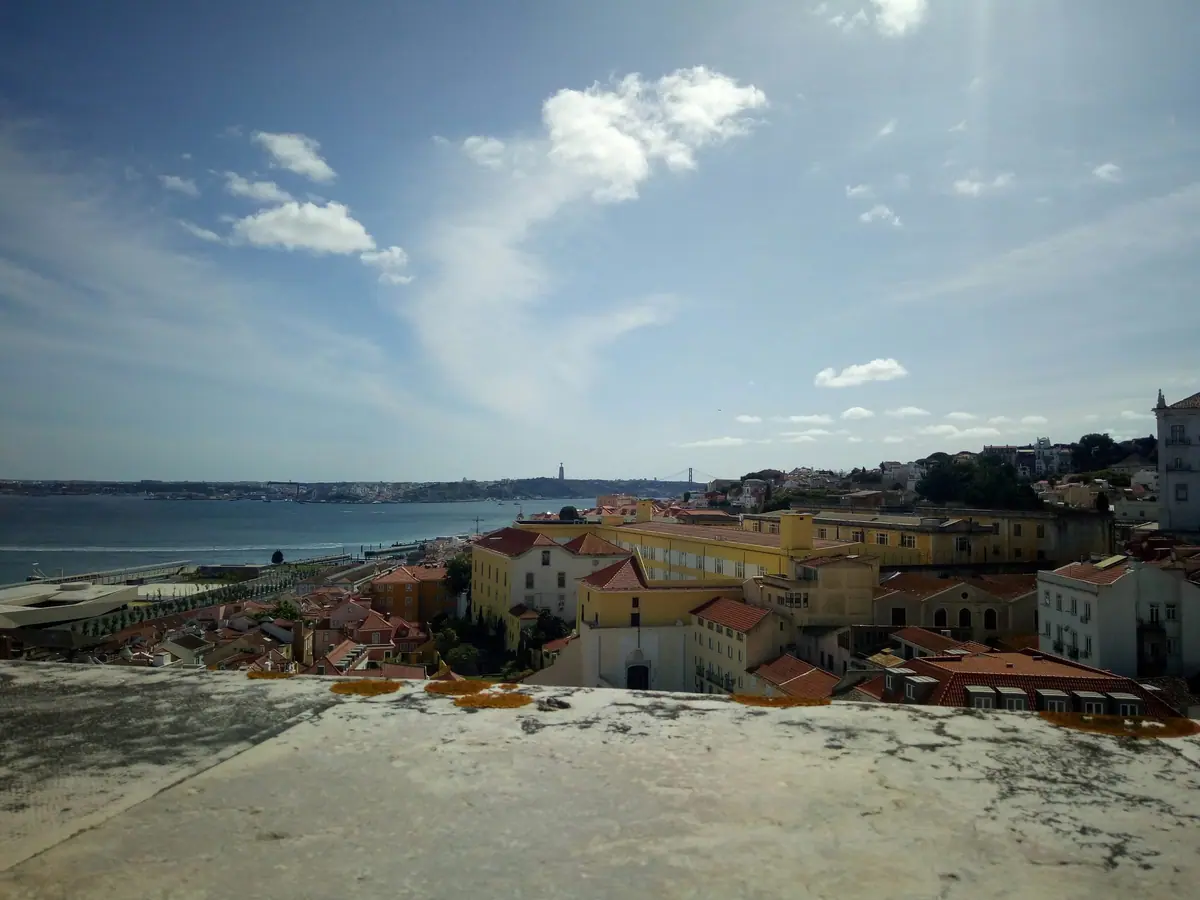
At 40 metres, a terrace looks out over the city and the river, a view visitors describe as 360 degrees. You look down on the roofs of Alfama to the Tagus, and the monastery of São Vicente de Fora sits right next door.
Getting up there takes legs. You climb by stairs, over 200 steps by visitors’ count, and some of them are uneven. One reviewer called it “a work out but worth every step”, which sums it up.
Who is buried in the National Pantheon
From the terrace, head back down to the four corner towers. Twenty people are honoured in the Pantheon: the six on the cenotaphs and fourteen more in tomb rooms inside those towers, all but one of them buried there.
The first tower holds Amália Rodrigues, the queen of fado, Lisbon’s song of longing, alongside three writers.
In the second lies Eusébio, star striker of the Lisbon club Benfica and of Portugal’s 1966 World Cup team, still the only footballer here. Beside him is Sophia de Mello Breyner Andresen, one of Portugal’s great 20th-century poets.
One name in that room has only a plaque: Aristides de Sousa Mendes, the consul in Bordeaux who gave visas to thousands of refugees in 1940, against his government’s orders.
The newest arrival has the third tower to himself. Eça de Queiroz, the 19th-century novelist and diplomat, came from his grave in Santa Cruz do Douro, in Baião, on 8 January 2025, in a storm and with no public. Some of his great-grandchildren had lost a court fight against the move.
After the writers and the singer, the fourth tower holds four heads of state. They run from Manuel de Arriaga, the Republic’s first constitutionally elected president, to Óscar Carmona, president for 25 years under the dictatorship. Carmona lies in the same building as Humberto Delgado, the general who stood against that regime in 1958.
Who lies in each tower
- Tower I
- Amália Rodrigues, fado singer; the writers Almeida Garrett, Guerra Junqueiro and João de Deus
- Tower II
- Eusébio, footballer; the poet Sophia de Mello Breyner Andresen; the writer Aquilino Ribeiro; Humberto Delgado, general; a plaque for Aristides de Sousa Mendes
- Tower III
- Eça de Queiroz, novelist
- Tower IV
- Presidents Manuel de Arriaga, Teófilo Braga, Sidónio Pais and Óscar Carmona
National Pantheon tickets, opening hours and the climb
One ticket covers the whole building, terrace included, and the Lisboa Card includes it. Show the card at the desk and go in; there’s nothing to book.
- October to March
- Tuesday to Sunday, 10:00–17:00, last entry 16:40
- April to September
- Tuesday to Sunday, 10:00–18:00, last entry 17:40
- Closed
- Mondays, 1 January, Easter Sunday, 1 May, 13 June, 25 December
- Children
- Free under 12 with an adult
- Half price
- Ages 65 and over, ages 13 to 24, and families with at least one adult and one child
You can buy the Pantheon on its own for €10, or get a 24-hour Lisboa Card for €31. For the Pantheon alone the ticket is the cheaper buy. Add the castle across Alfama and the two tickets already cost more than the card.


Allow an hour to an hour and a half with the terrace. If you can manage the stairs, don’t skip them: the view is the best part. Without them you still get the ground floor, the nave and the tomb rooms, which is also the part open to visitors with reduced mobility.
Numbers inside are capped, so now and then there’s a short wait at the door, but inside it stays quiet. One August visitor found mid-morning calm.
Obras de Santa Engrácia: how the National Pantheon took 284 years
In Portuguese, a job that never ends is “obras de Santa Engrácia”, works of Santa Engrácia. This is the church that gave the language the phrase.
It starts with a curse. In 1630 the old church of Santa Engrácia was said to have been desecrated. Simão Pires Solis, a New Christian, as Jewish converts and their families were called, was executed for it in 1631.
As the story goes, he swore he was innocent and said the church would never be finished. When its chancel collapsed in 1681, people read it as the curse at work.
A year later, on 31 August 1682, the prince regent Pedro laid the first stone of a new church designed by João Antunes. Antunes died in 1712 with the work unfinished, and around 1770 the central dome still hadn’t been built.
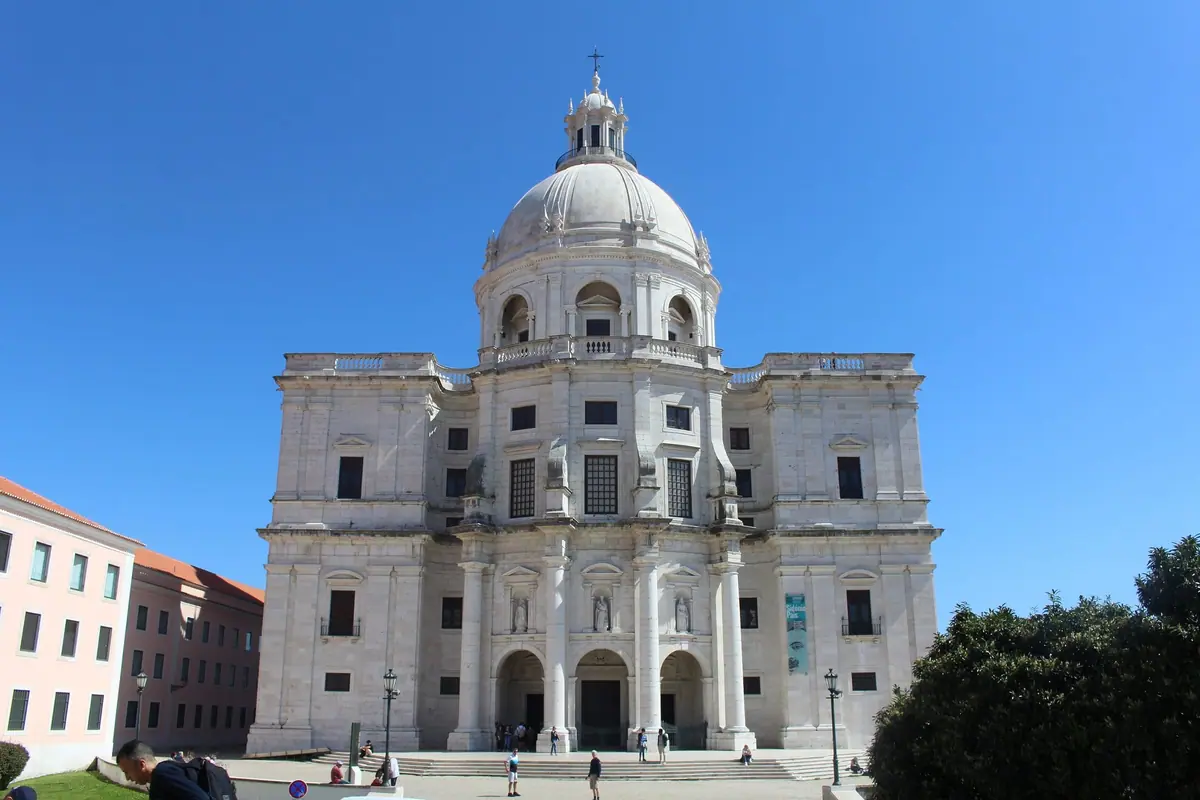
The unfinished church, built up to its cornice, survived the 1755 earthquake. In 1834, when Portugal abolished its religious orders, the army took it over, and from 1910, the year it became a national monument, it worked as a factory making boots for soldiers.
A 1916 law set it aside as the National Pantheon, but the army only left in 1954. Two years later a competition drew seven designs, the architect Luís Amoroso Lopes won, and work finally started in 1960.
The end came on 7 December 1966, hurried along to mark 40 years since the 1926 coup that opened the way to the Estado Novo, Portugal’s dictatorship of the time. The 18th-century organ at the high altar was brought from Lisbon Cathedral.
The never-ending works even have their own display. The interpretation centre inside keeps pieces of the first church, goldsmith’s work from the inaugural mass and plaster models of those endless works.
Getting to the National Pantheon, and Alfama nearby
The Pantheon stands on Campo de Santa Clara, above the river. Santa Apolónia, the metro and train station on the river, is under ten minutes’ walk away, uphill. Tram 28 and several buses stop close by, at the Panteão Nacional and Campo de Santa Clara stops.
On Tuesdays and Saturdays the square out front is closed to cars, because the Feira da Ladra, Lisbon’s flea market, takes it over. Come by metro or tram on those days.
Right beside the Pantheon, the monastery of São Vicente de Fora was built between 1582 and 1629. Its church holds the pantheon of the House of Braganza, Portugal’s last royal family, so the nation’s heroes and its kings sit a few steps apart.
Alfama after the Pantheon
-
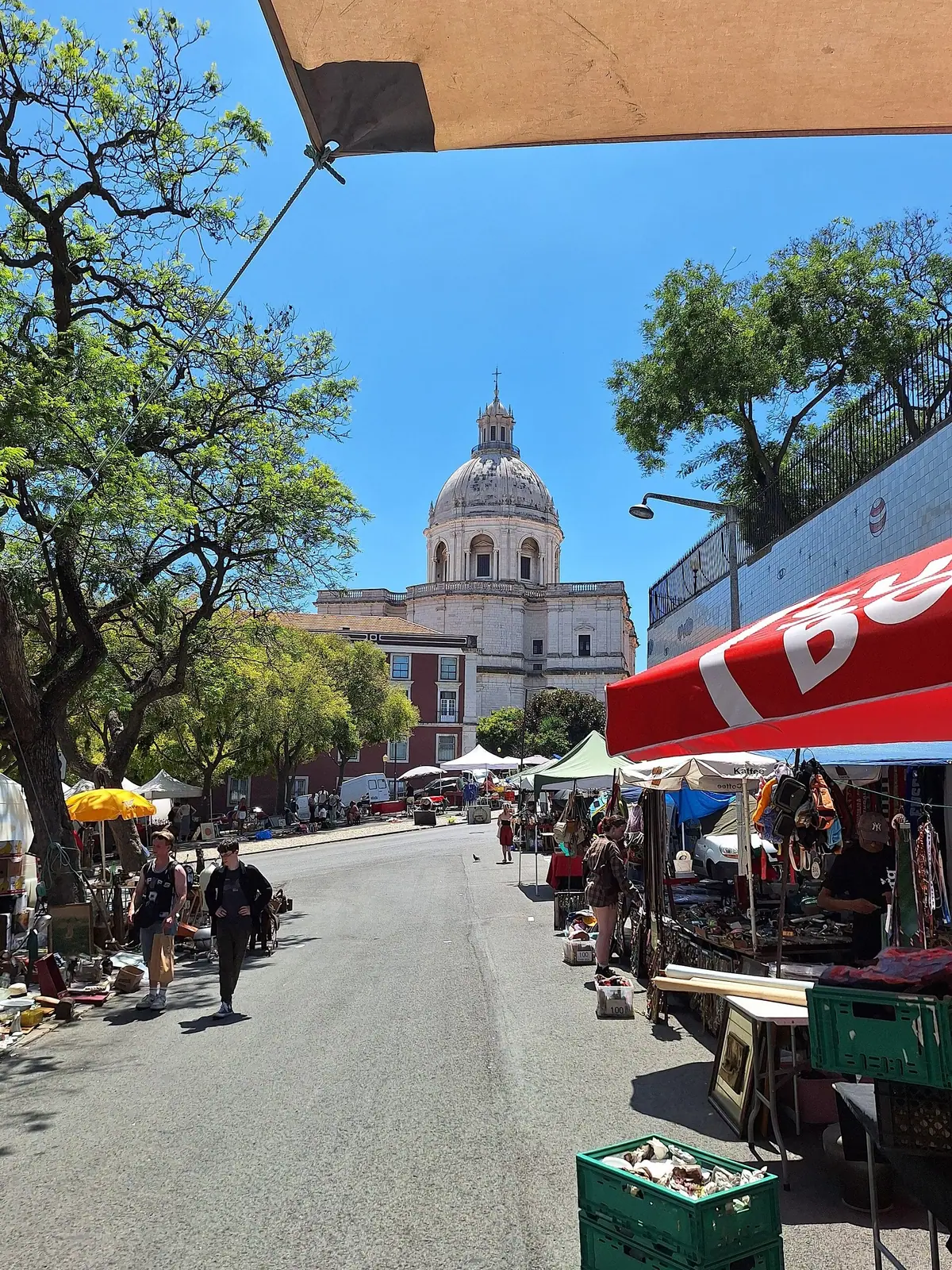 Feira da Ladra Right outside, on Tuesdays and Saturdays from 9:00 to 18:00. The market dates back to 1272.
-
 São Jorge Castle → Across Alfama on its own hilltop. Its walls give you the other big view on this side of the city.
€17 -
 Lisbon Cathedral → Downhill towards the Baixa: Lisbon's cathedral, with two towers that make it look like a fortress. €7
Card and combos
Lisboa Card options
Pick the one that fits your trip. Prices are per adult, and you choose your dates on the next page.


Tickets
Popular tickets around Lisbon
The ones other visitors book most.


