
Lisbon · Included with the card
Royal Treasure Museum (Museu do Tesouro Real)
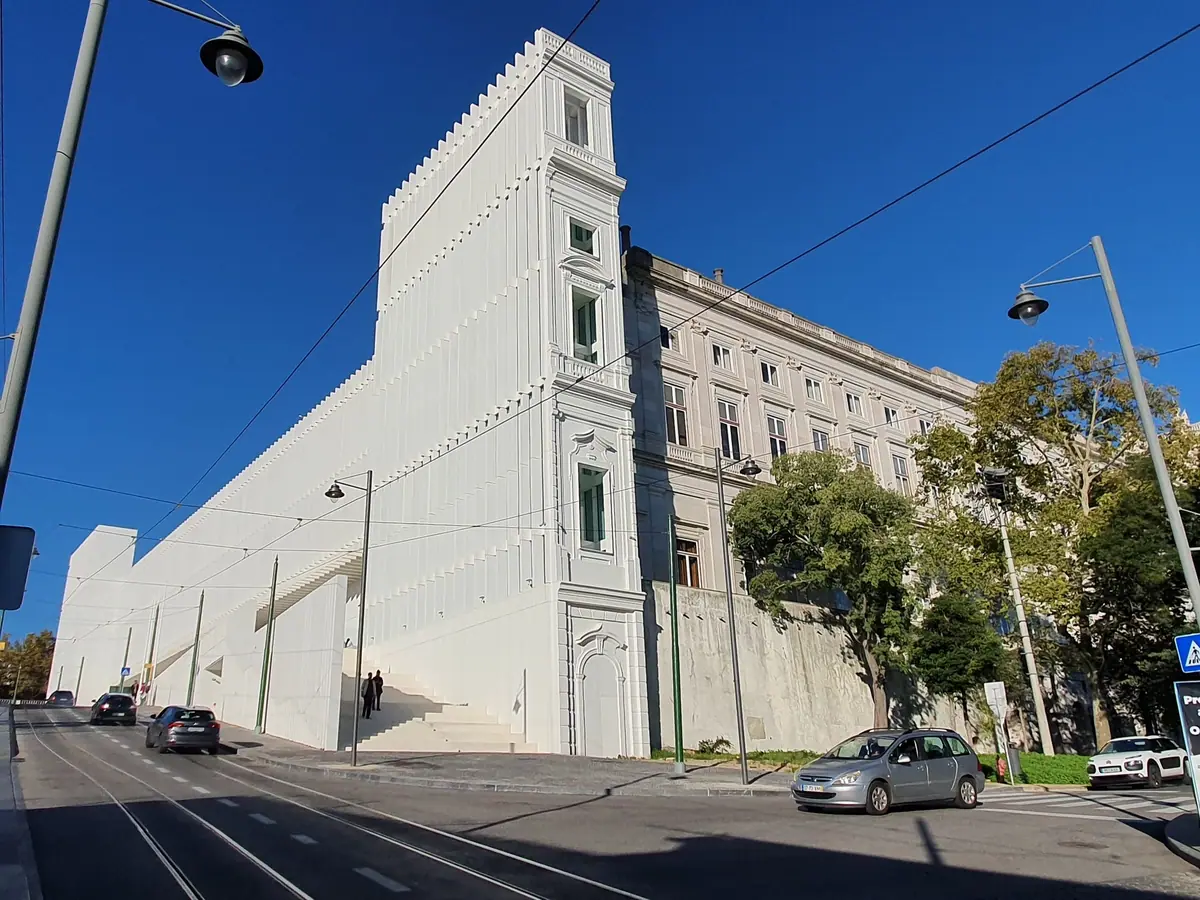
Lisbon's Royal Treasure Museum keeps Portugal's Crown Jewels, led by the crown and sceptre made in Rio de Janeiro in 1817 for João VI, the king whose court fled to Brazil. Around them sit Brazilian gold and diamonds and the Germain silver, a royal dinner service from Paris, in a three-storey vault behind armoured doors. The Lisboa Card includes it.
Before you go
- Time inside30 min – 1 h
- Weekly closingNone





Inside the Royal Treasure Museum: Crown Jewels, Brazilian gold and the Germain silver
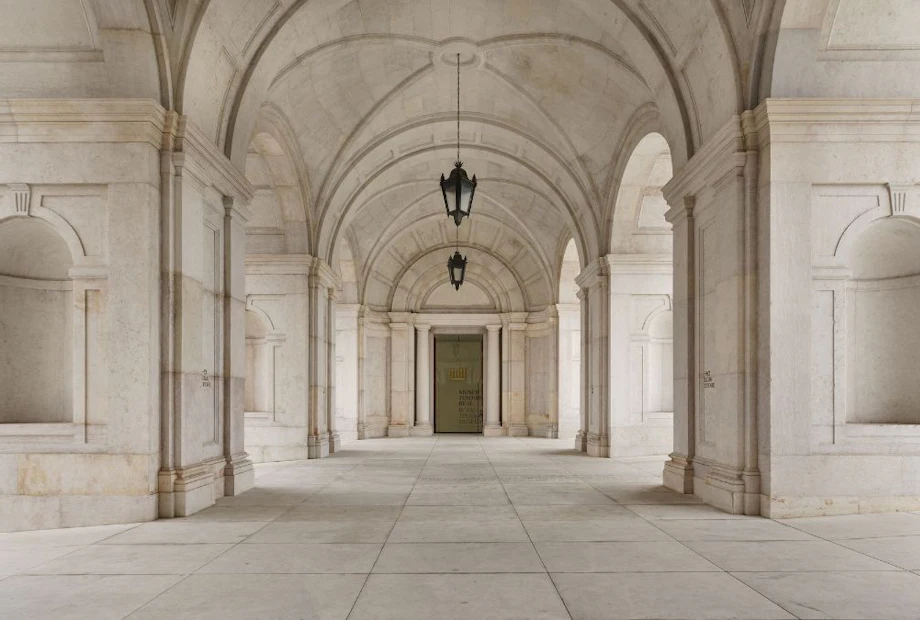
The museum is the vault itself. You step through two armoured doors, 5 tonnes each, into a strongroom built into the new west wing of the Ajuda palace. By the museum’s own account, it’s one of the largest in the world.
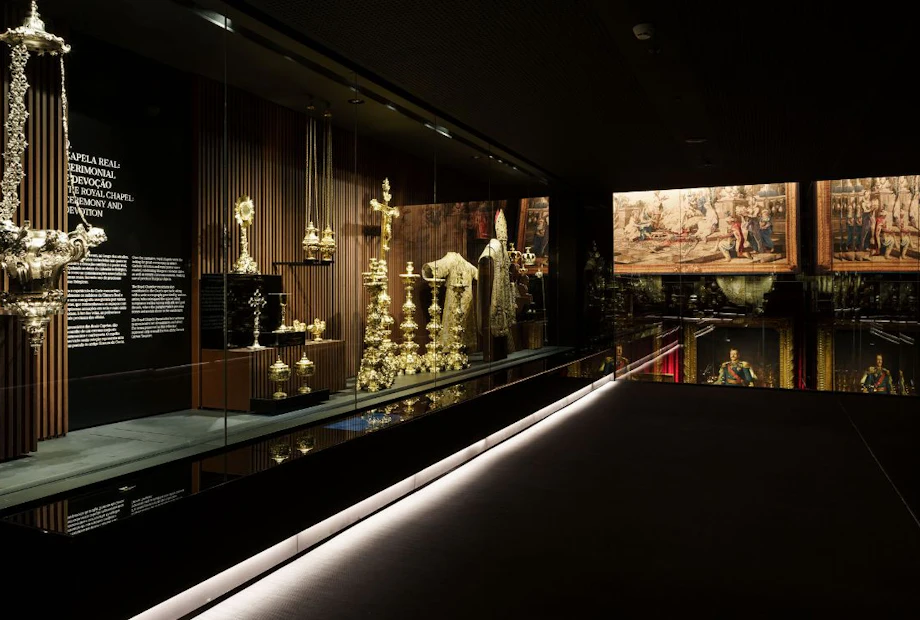
Inside, the rooms are dark and every piece has its own light. More than a thousand objects fill eleven sections over three floors, joined by gentle ramps, and no more than 100 visitors are allowed in at once.
The route opens with gold from Brazil and closes with the story of the treasure’s own travels. At the very end, the café on the top floor looks out over the city and the river, and its menu is vegetarian.
Visitors advise seeing the rooms first and eating after, since going back down is awkward, and bringing headphones for the audio guide, which plays on your phone over the museum’s Wi-Fi.
Gold and diamonds from Brazil
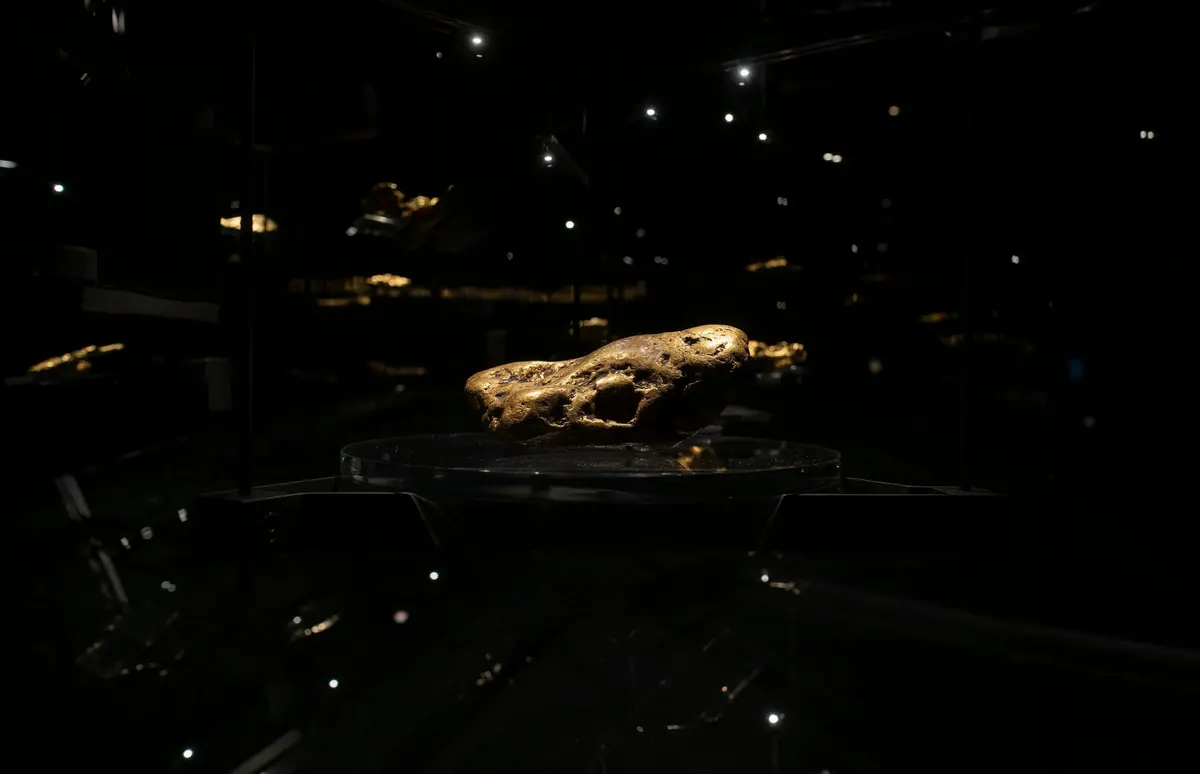
The Portuguese hunted for gold in Brazil from 1500, but the big deposits only turned up at the end of the 1600s, in Minas Gerais, the mining region inland from Rio. Diamonds followed in the early 18th century, and in quantity.
The star of the room is a gold nugget found in Goiás, further inland, in the second half of the 18th century. King Luís I, who reigned from 1861 to 1889, had it shown off at a ball in the Ajuda palace in 1876.
Royal jewels and the orders of chivalry
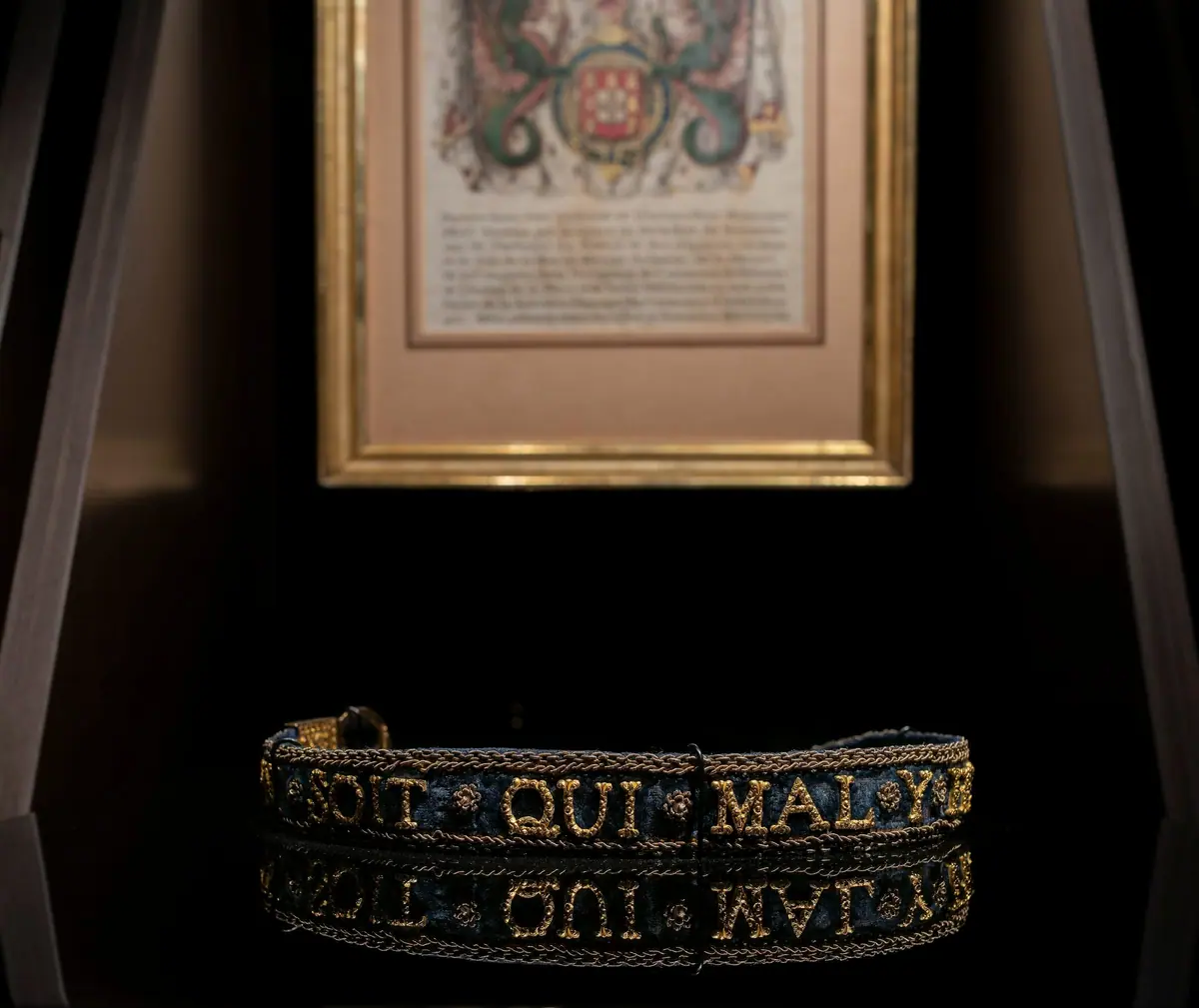
The jewellery comes first. The Crown Jewels as a set date from 1827, when the estate of João VI, the king who had ruled from Brazil, was divided, and Portugal’s monarchs wore them until 1910.
Look out for the Castellani casket of 33 jewels, the city of Rome’s wedding gift in 1862 to Queen Maria Pia, the Italian princess who married Luís I.
Then come the honours foreign courts sent to Lisbon. The blue Garter of England’s Order of the Garter was made in London in 1822–23 and carries its motto, “Honi soit qui mal y pense”.
The most far-travelled is the Grand Cross of the Order of Kamehameha I, from Hawaii. It’s linked to the European tour of Kalākaua, Hawaii’s king, which stopped in Lisbon in 1881.
The crown, the sceptre and João VI’s mantle

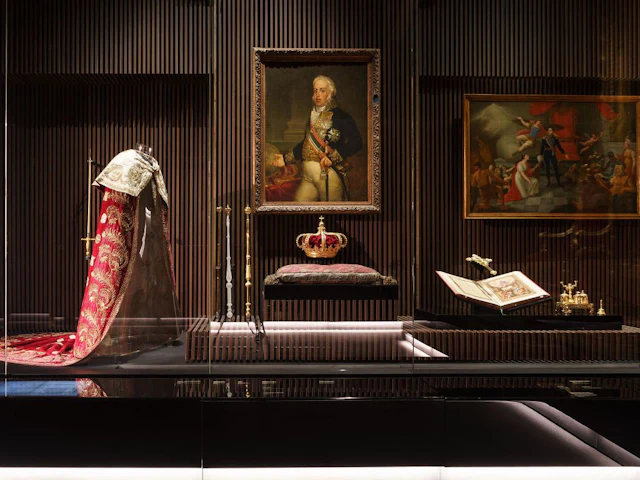
Here’s a surprise for anyone raised on coronations: Portuguese kings were never crowned, consecrated or anointed. They were acclaimed, in a ceremony that used a crown, a sceptre, a mantle and a sword of state.
The crown on show was made in Rio de Janeiro in 1817, along with the gold sceptre. Beside them is the mantle from João VI’s acclamation, made in Rio the same year: he was king of Portugal, but in those years he ruled from Brazil.
Ceremonial silver and gifts from popes
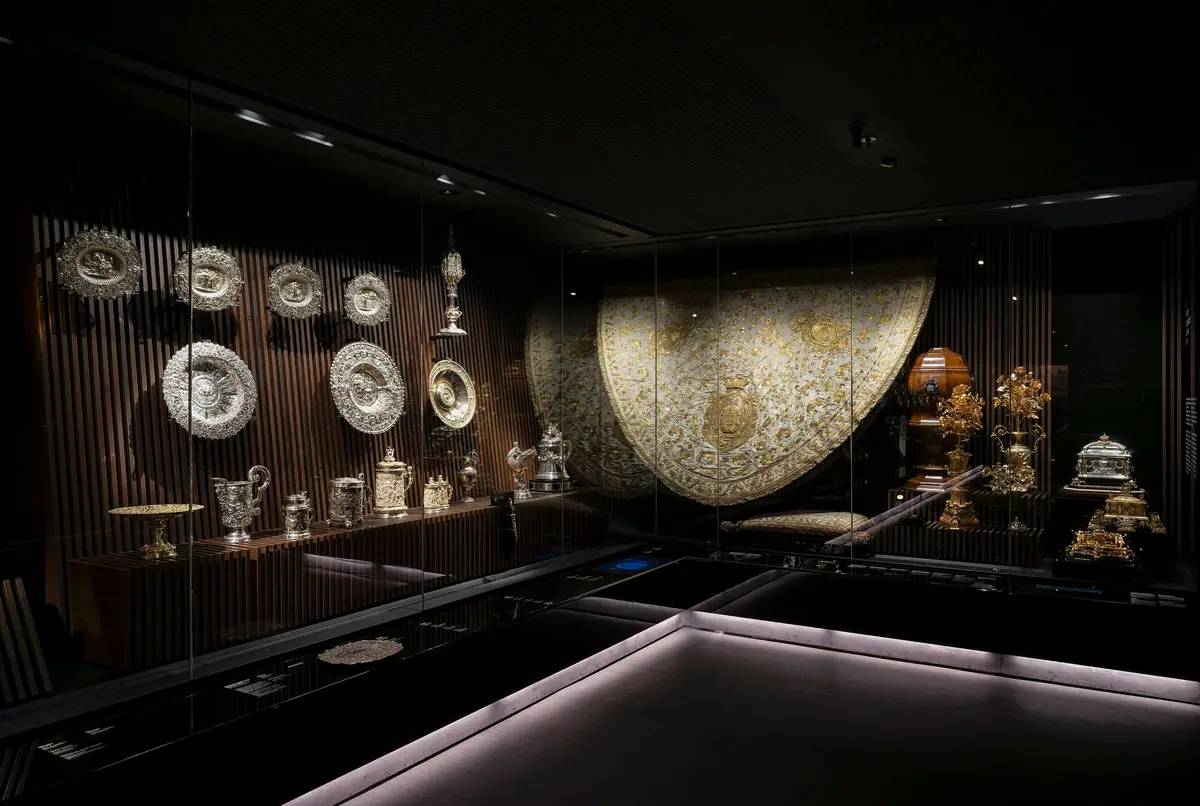
The next rooms hold the gilt silver brought out for the big royal occasions: baptisms, acclamations and the washing of feet on Maundy Thursday, the day before Good Friday.
The oddest piece is a large cup from Transylvania with an Arabic inscription naming Mehmed IV Giray, khan of the Crimean Tatars. It became the royal baptismal font in 1819, when the future queen Maria II was baptised in Rio.
Further on are two Golden Roses, gold sprays of roses that popes gave to Catholic monarchs as a mark of favour. Gregory XVI sent one, made in Rome, to Maria II in 1842.
The Germain silver, José I’s table
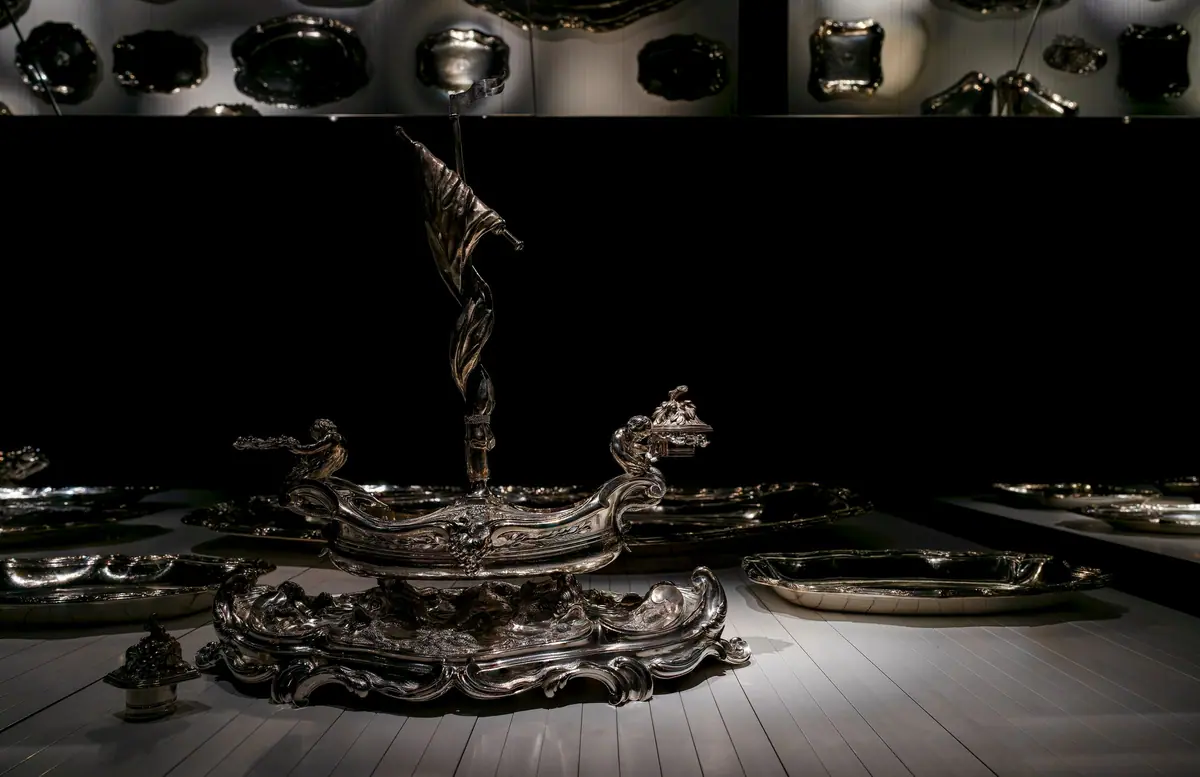
The 1755 earthquake had wrecked Lisbon, and with it much of the royal silver. In June 1756 King José I, who was on the throne when the city fell, ordered a new table service from François-Thomas Germain, silversmith in Paris.
It was built for dinner “à la française”, served in four rounds: stews, then roasts, then side dishes, then sweets and fruit. Look for the cruet stand shaped like a boat and a kettle with its own spirit lamp, the only one in all of Germain’s work.
The fourth round never got its centrepieces. Silver sculptures glorifying the king, one with Neptune and the discovery of Brazil, were left unfinished, so the table on show is the one without its showpieces.
Royal Treasure Museum tickets, opening hours and security
All of that fits into a visit of 30 minutes to an hour, visitors say. If jewellery isn’t your thing, the crown and the Germain table are the two stops that justify the climb.
Children up to 6 go in free; everyone else needs a ticket, which the Lisboa Card includes with no booking. The palace next door has its own ticket, and the card covers that too.
- Open
- Every day, 10:00–18:00 from October to April and 10:00–19:00 from May to September
- Last admission
- An hour before closing, so 17:00 in winter
- Wednesdays
- Open, though the Ajuda palace next door is shut
- Closed
- 25 December and 1 January
- Children
- Free up to age 6; reduced tickets from 7 to 24 and for over-65s
The Treasure on its own is €11, and there’s a family ticket for two adults and two young people. A 24-hour Lisboa Card at €31 takes you up the hill on tram 18 too. Add the palace and the Coach Museum the same day and it costs less than the three tickets.
Plan around that 17:00 winter cut-off. It comes before the palace’s last entry, so on a winter afternoon the Treasure goes first; in summer it’s the other way round.

The security check is slow, and that’s down to the jewels. You go through X-ray scanners one by one, and the turnstiles open with the QR code on your ticket, so keep it until you leave.
Bags don’t go in, whatever the size, and nor do power banks. They go in lockers that take a coin you get back; as one reviewer put it, “put absolutely EVERYTHING in the locker first”.
Visitors describe quiet rooms, even in summer. The rooms are dark, so photos are hard; your phone’s night mode helps. On access, the floors are linked by ramps, but the museum’s website says nothing about lifts, so ask at the desk if you need one.
The Royal Treasure, from fire to exile in Brazil
What you see is what survived two rough centuries. In 1794 a fire at the Real Barraca, the wooden royal residence that replaced the palace lost in 1755, took more of the treasure. The next year the prince regent João, the future João VI, laid the first stone of the Ajuda palace.
In 1807, with French armies invading, the royal family, court and treasure sailed for Brazil. The king came back in 1821 with nearly everything; what had stayed in Brazil went to London in 1831, and part was lost. The museum’s last room tells that story, around the brazilwood case made for the crown in Rio.
Back in Lisbon, history kept stopping the builders: the French invasions, a civil war over whether the king should share power with a parliament, the end of the monarchy in 1910. The palace was left less than half built, and the treasure passed to the state.
The Hague theft and the Royal Treasure vault
On 2 December 2002 the collection lost six jewels. They were on loan to the Museon in The Hague for a show of European crown jewels, and Dutch police found only a hammer.
The Hague theft
- Taken
- Six jewels, among them a gold cane set with 387 brilliants and a ring with a 37-carat diamond
- How long it took
- About 40 minutes
- Since
- Case closed in 2009; the jewels have never turned up
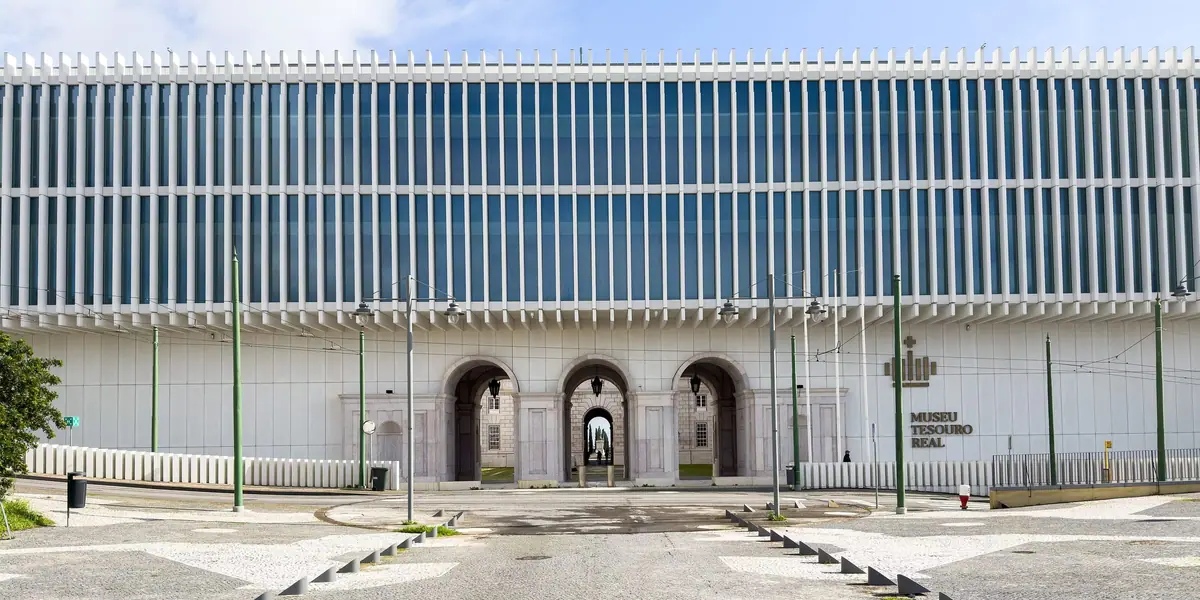
Part of the compensation went into the palace’s west wing, finished in 2016 with money from Lisbon’s city council and the city’s tourism association. Its architect, João Carlos dos Santos, called the vault “a small jewellery box”, and the museum opened on 1 June 2022.
Getting to the Royal Treasure Museum, and down to Belém
The museum faces the Calçada da Ajuda, the street that climbs from Belém, and tram 18 and buses 729 and 732 stop on that side. The train from Cais do Sodré reaches Belém in about 7 minutes, but from the station it’s an uphill walk.
From the Treasure down to the river
-
 Ajuda National Palace → Same building, separate entrance and ticket. Shut on Wednesdays, when the Treasure is open.
€15 -
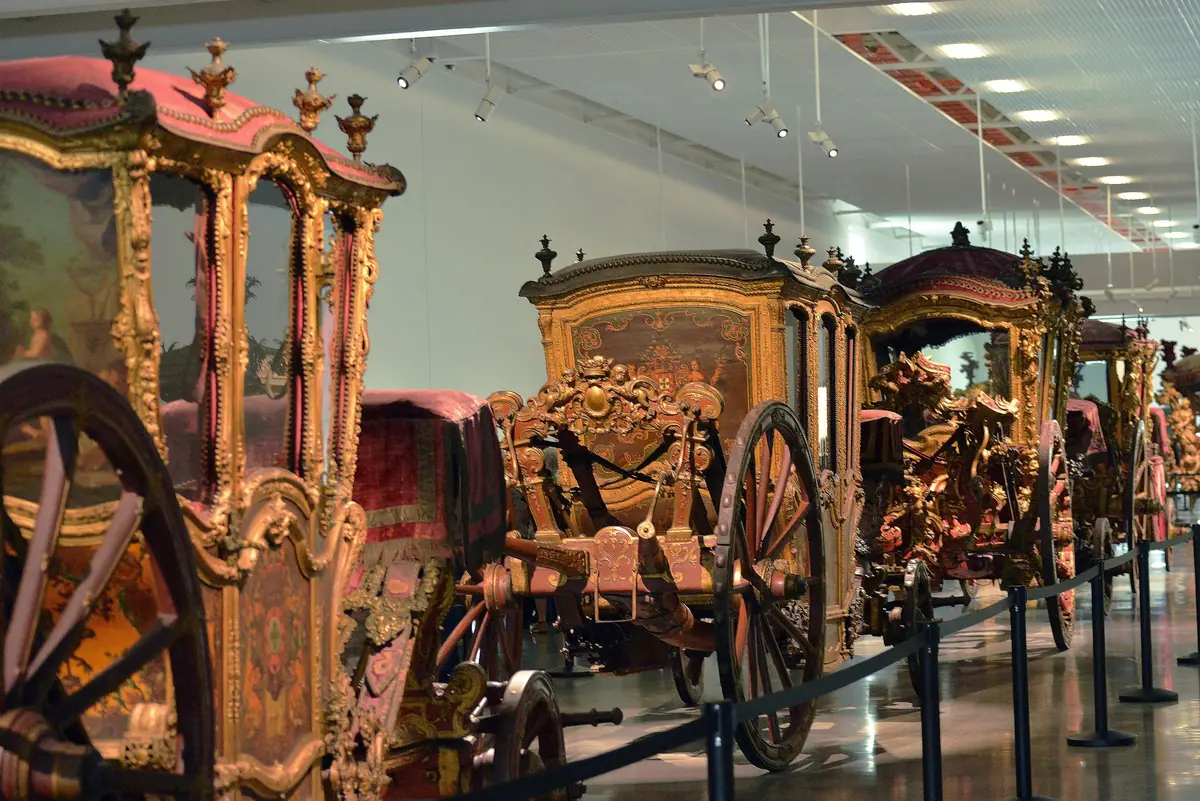 National Coach Museum → Down in Belém. Closed on Mondays, a day the Treasure opens.
€15 -
 Jerónimos Monastery → Further along in Belém, also shut on Mondays. Card holders book a cloister time ahead.
€19.50 -
 Monument to the Discoveries → On the river across from the monastery, through the underpass. Open on Mondays as well.
€10
Card and combos
Lisboa Card options
Pick the one that fits your trip. Prices are per adult, and you choose your dates on the next page.


Tickets
Popular tickets around Lisbon
The ones other visitors book most.


