
Lisbon · Included with the card
National Coach Museum (Museu Nacional dos Coches)
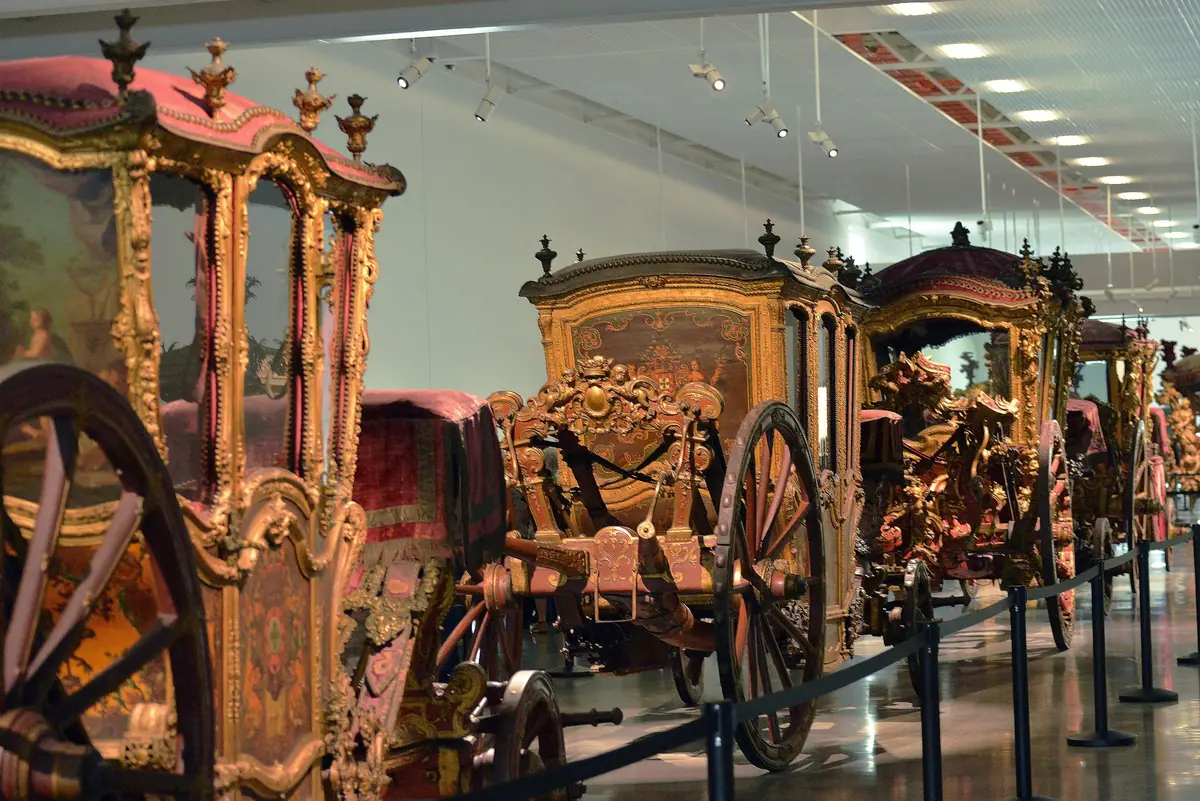
Lisbon's National Coach Museum holds what it calls the world's most important collection of ceremonial coaches, and it's the city's most visited museum. The stars are three gilded coaches built in Rome in 1716 so that João V, Portugal's king in the age of Brazilian gold, could impress the Pope. You get in with the Lisboa Card.
Before you go
- Time inside45 min – 2 h
- ClosedMonday



Inside the National Coach Museum: the coaches to find
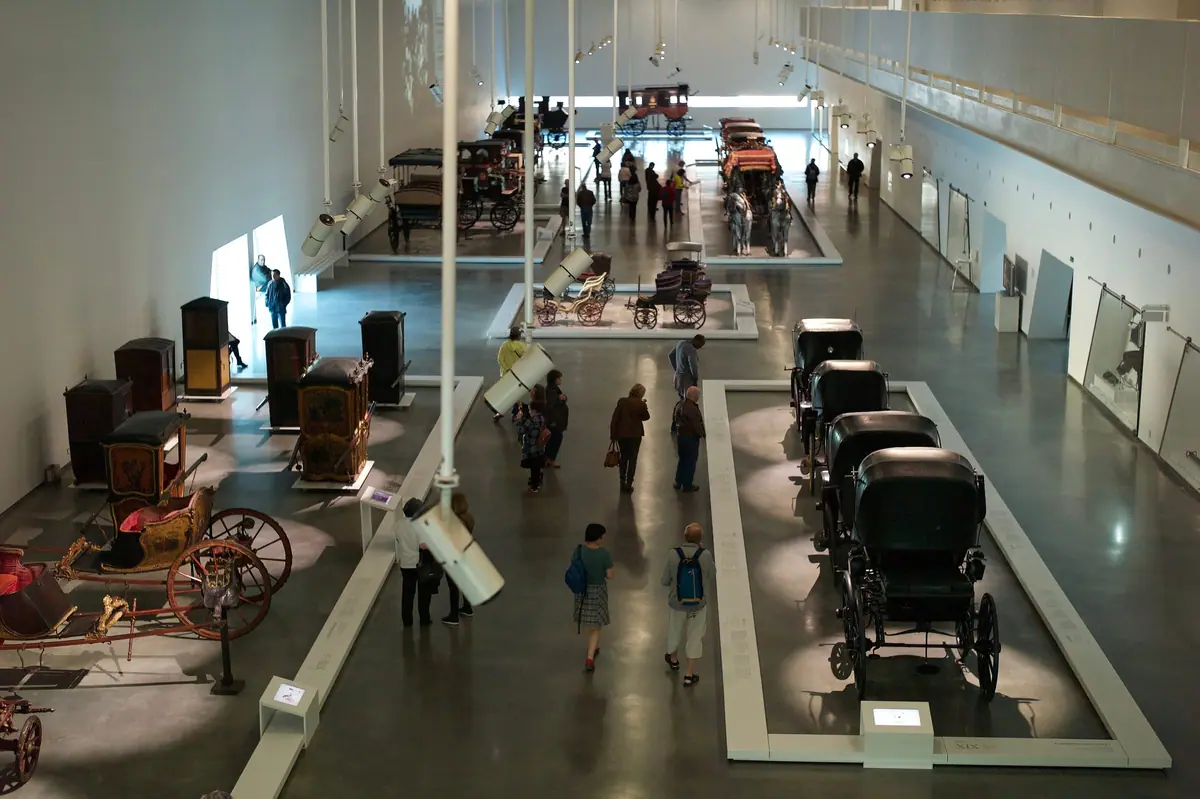
The collection fills two long halls on one floor, the coaches lined up on low platforms under light from above. Coaches made in Spain, Italy, France and Portugal stand side by side, so four centuries of court travel fit into a single walk.
Start with the gold. Three of the coaches came from one diplomatic mission to Rome, and they set the tone for the rest.
The Coach of the Oceans
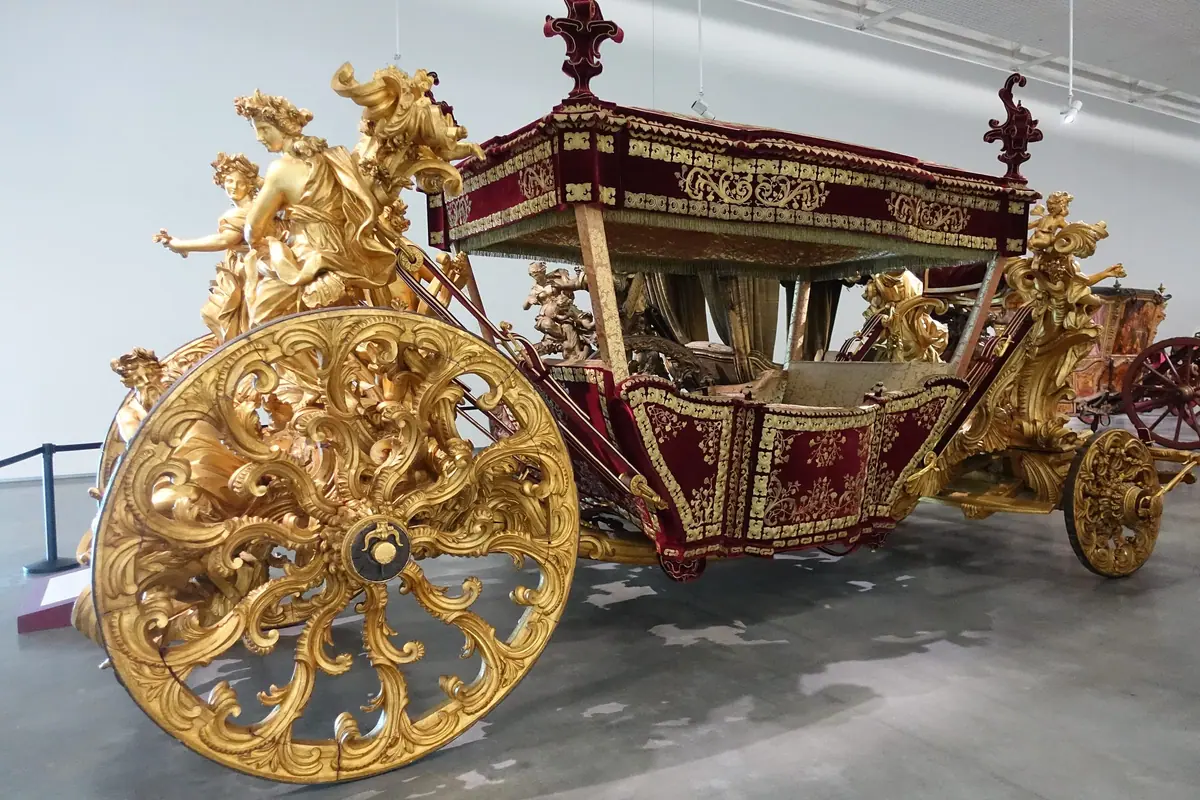
In 1716 João V sent an embassy to Pope Clement XI with five themed coaches and ten more to escort them, all made in Rome. This one was the triumphal car, and it’s 7.2 metres long.
The carving to see is at the back. Apollo, the Greek sun god, stands in the middle, and below him two old men hold hands. They’re the Atlantic and the Indian Ocean, joined at the Cape of Good Hope, the passage that took Portuguese ships to India.
The Coronation of Lisbon and the Ambassador’s Coach
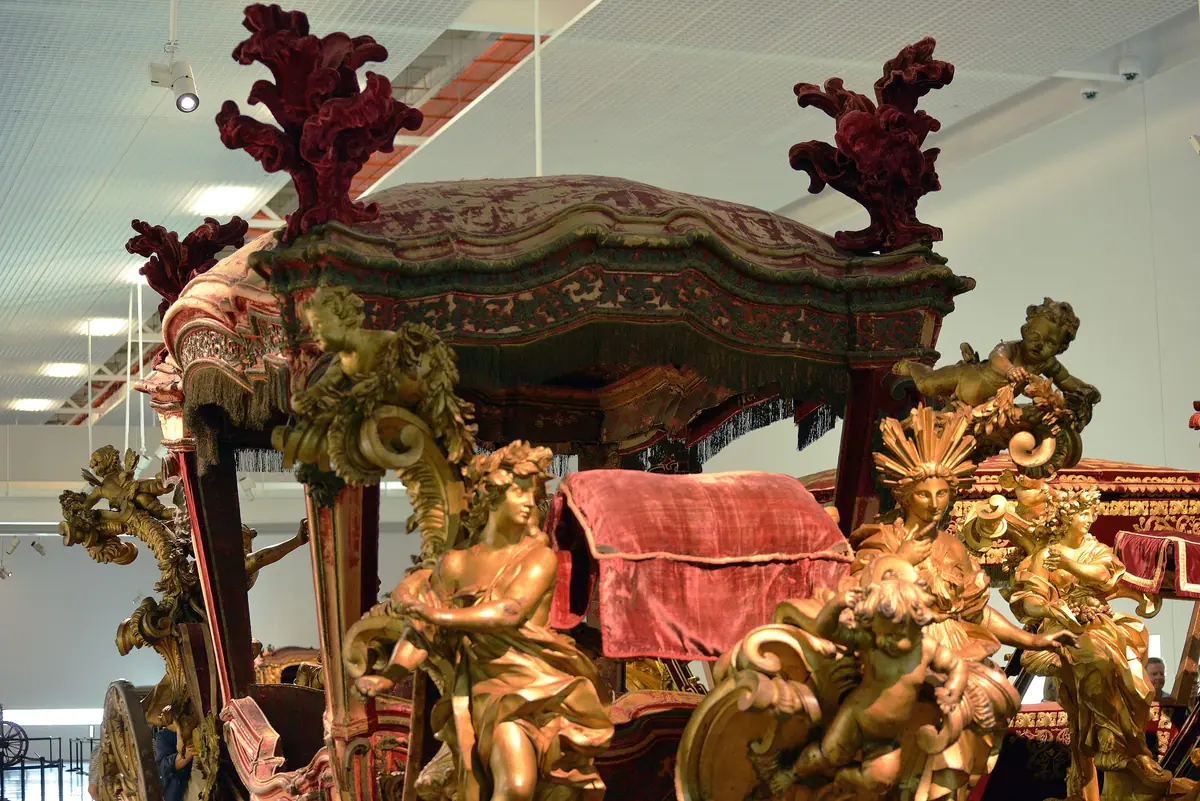
The same embassy left two more coaches in the collection. On the Coronation of Lisbon, the city is crowned by figures of Fame and Abundance, and at her feet a winged dragon, emblem of the royal house, breaks a Muslim crescent.
The third, the Ambassador’s Coach, carried the Marquis of Fontes, João V’s envoy, to his formal entry before the Holy See. Its floor is inlaid with ivory.
Pope Clement XI’s coach
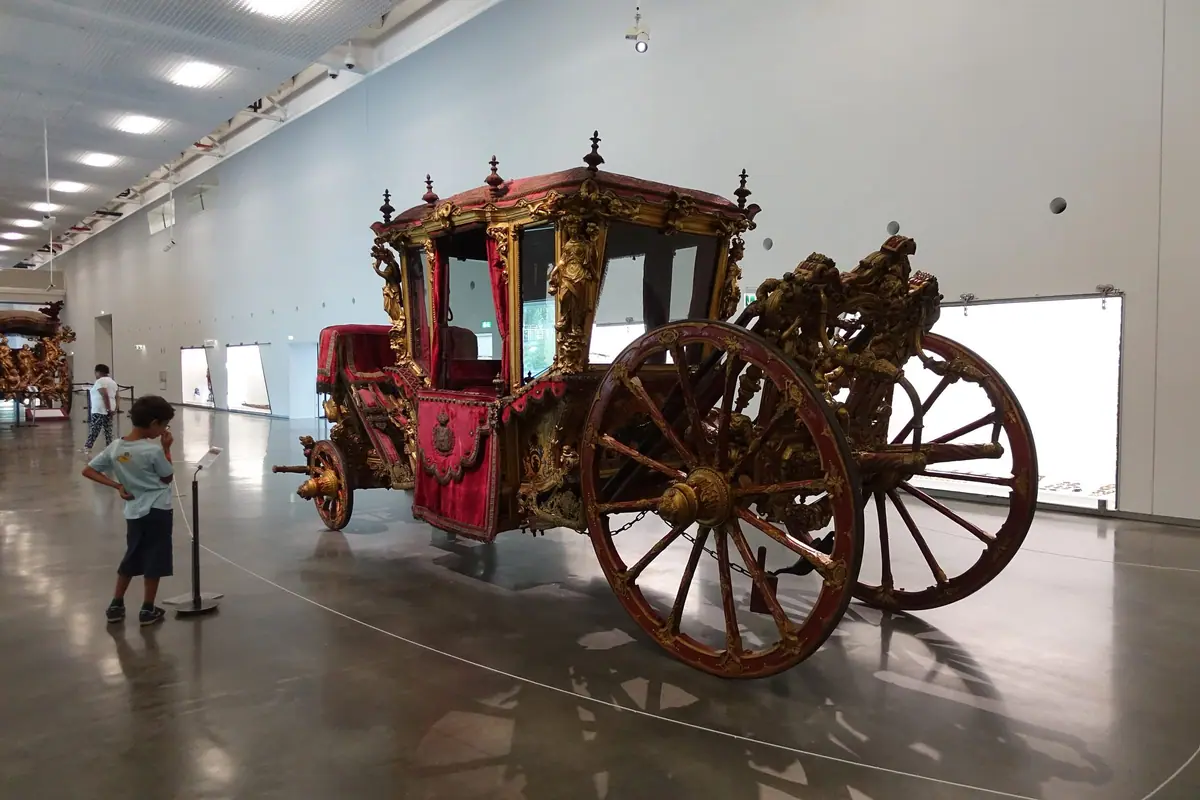
Gifts went the other way too. In 1715 the Pope sent João V this coach, with blessed ribbons for the baptism of the king’s son, Prince José.
It stayed in use for well over a century. The curtains carry the arms of King Pedro V, who rode in it in his wedding procession in 1858. On the rear wheels, four caryatids, carved female figures, stand for the seasons.
The Crown Coach, from France
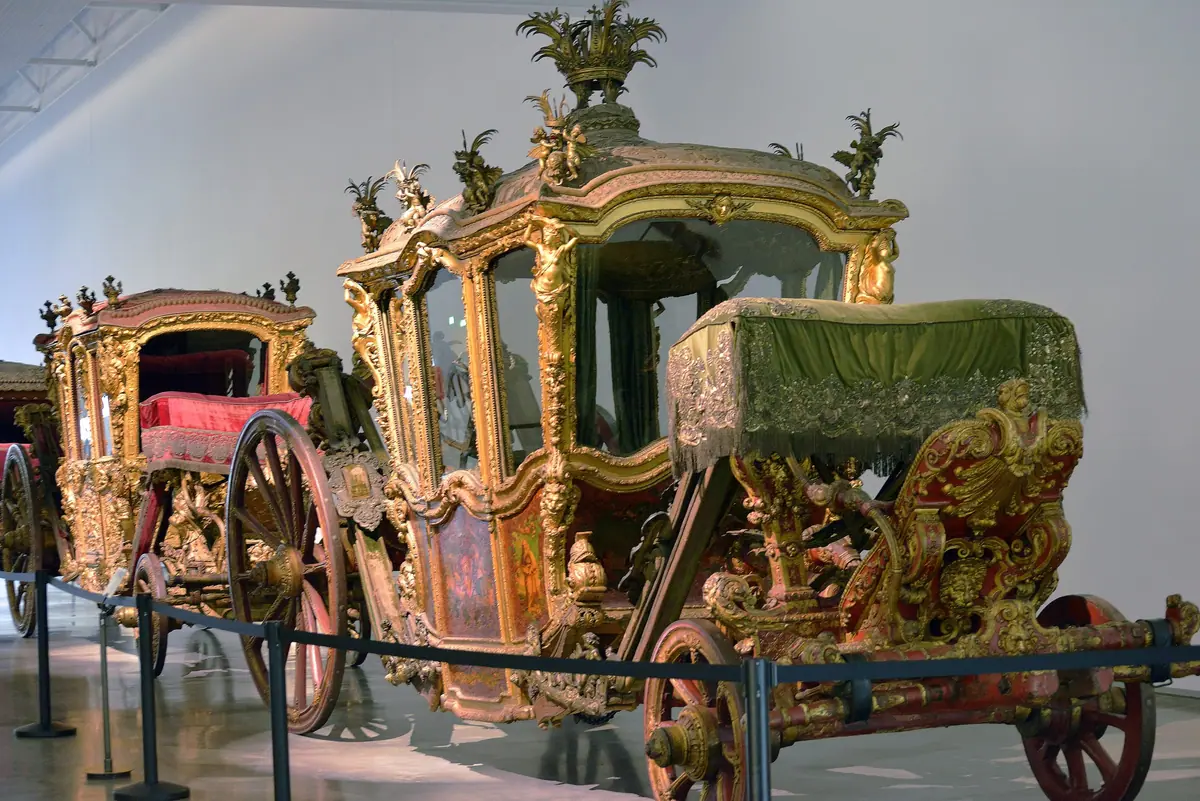
João V sent embassies to France as well as Rome. This coach was ordered in 1715 for the one to the court of Louis XIV, the French king. You’ll spot it by the bronze crown on the roof.
Inside it’s lined in green and gold brocade, and the floor is tortoiseshell and bronze, inlaid in the Boulle style, named after a French royal cabinetmaker.
Philip II’s coach, the oldest in the museum
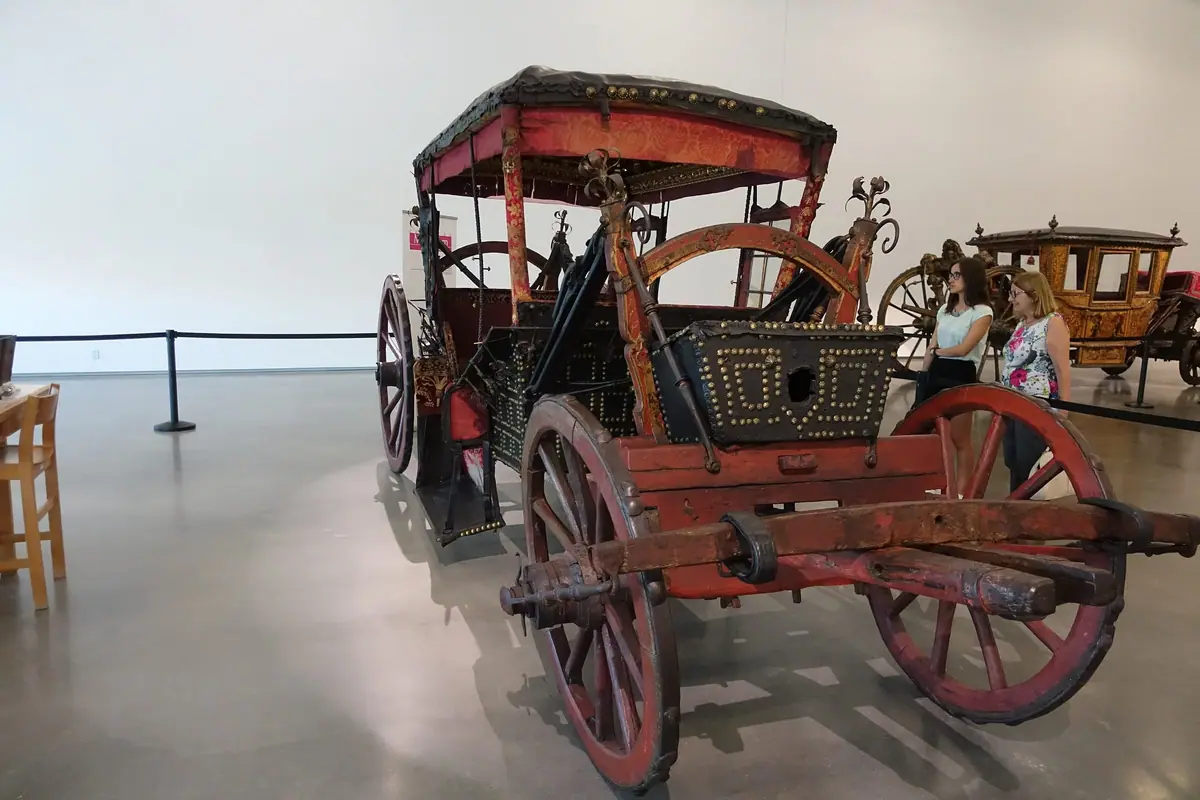
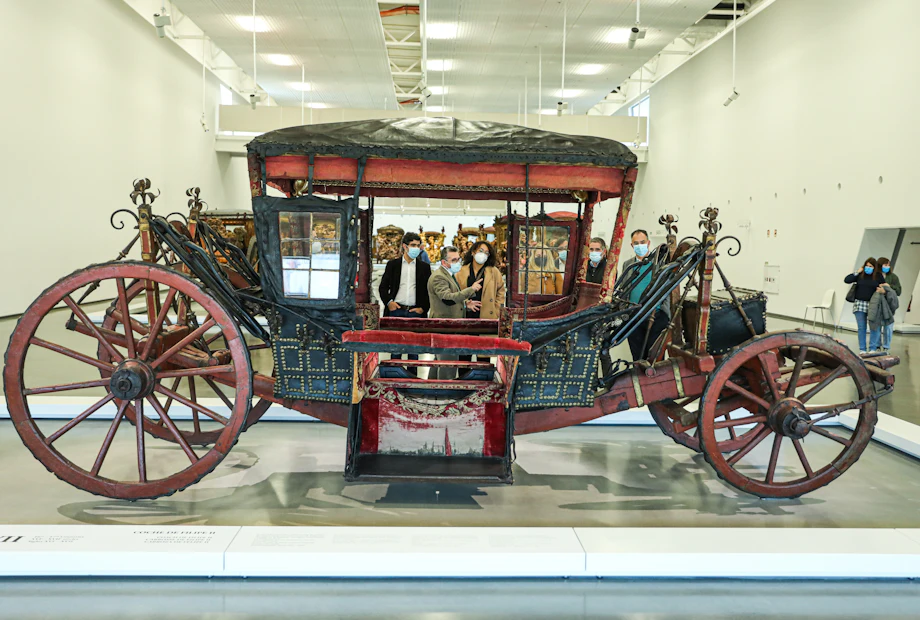
After the Roman coaches it looks plain, but it’s the oldest in the collection, Spanish, from the late 16th or early 17th century. Philip II of Portugal, whom the Spanish count as Philip III, ruled both countries and rode in it on his visit to Portugal in 1619.
It had no coachman: two postilions riding the horses drove it. Inside, under the red embroidered velvet, the seat cushions hide a toilet.
Beyond these, the 18th-century coaches keep the details coming. João V’s own coach has a glazed rococo body and the twelve signs of the zodiac on its wheels. José I’s has a royal eagle on the back panel and carved heads of Indigenous South Americans, a nod to Brazil.
For long journeys there’s a sleeping carriage with the arms of King João VI, from the early 19th century. Its seats fold down into a bed, with a toilet under them.
National Coach Museum tickets and opening hours
Show your Lisboa Card at the desk and walk in; there’s nothing to book.
Most visitors get round in about an hour, and one who took her time suggests an hour and a half to two. It rarely feels crowded.
It’s a compact museum, and one or two reviewers found it dry unless you love coaches. More come out like the visitor who nearly didn’t pay to go in and wrote that “it turned out to be amazing”.
- Open
- Tuesday to Sunday, 10:00–18:00, last entry 17:30
- Closed
- Mondays, 1 January, Easter Sunday, 1 May, 13 June, 25 December
- Children
- Free up to age 12
- Half price
- Ages 65 and over, ages 13 to 24, and families with at least one adult and one minor
A 24-hour card is €31 and also covers the train, trams and buses out to Belém; the museum alone is €15. Add the Jerónimos the same day and the card already costs less than the two tickets.


Older guides may still send you to the Royal Riding School across the road, the museum’s first home. It has been closed for works since 29 September 2025, with no date to reopen, so for now the coaches are all in the new building.
The riding school’s eight coaches and carriages moved over too, among them one built for Prince Francisco in 1715.
The ticket sold through this site comes with a downloadable audio guide in English and Portuguese. In November 2026 two temporary shows were on, model coaches and portraits of Portugal’s kings and queens, and the shop sells books and design pieces based on the collection.
Leave tripods, flash and selfie sticks behind. There are ramps and lifts to every public area, and reception lends wheelchairs for free.
How the National Coach Museum crossed the road
Queen Amélia, Portugal’s last queen, opened the museum on 23 May 1905 in the royal riding school of Belém Palace. She wanted the royal household’s carriages kept together and preserved.
The riding school was the museum’s home for over a century. On 23 March 2015 the move to the new building began, with about 70 vehicles coming from Belém and from the ducal palace at Vila Viçosa.
The first to leave, wrapped in cellophane, was the landau in which King Carlos I and his heir, Prince Luís Filipe, were shot dead in Lisbon on 1 February 1908. Restored, it has been back on show since 2019, the most haunting vehicle in the museum: the bullet marks are still visible.
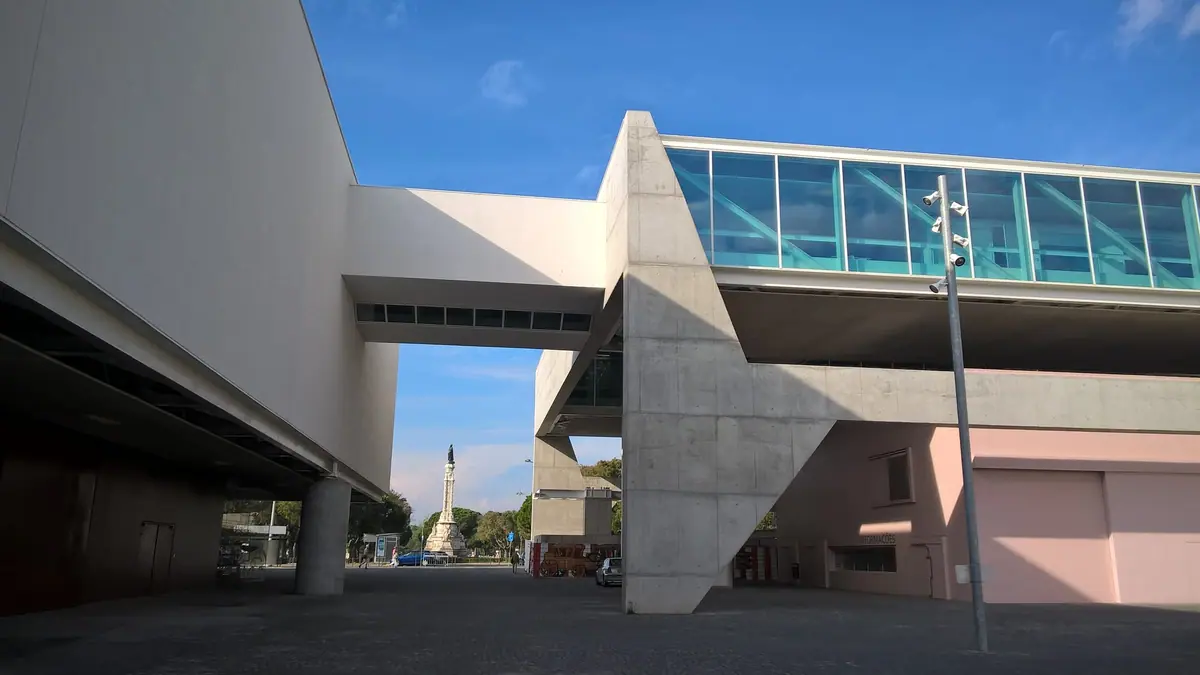
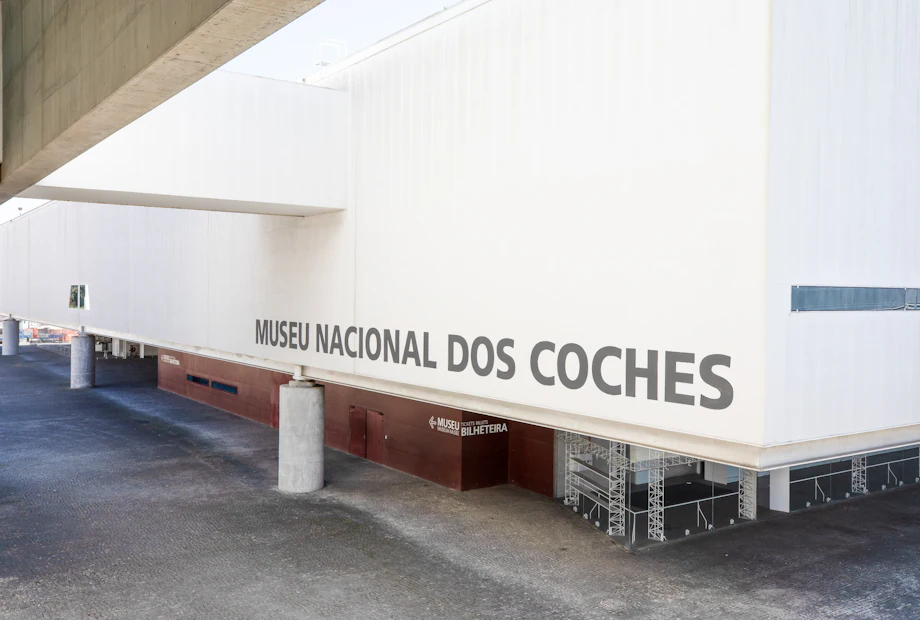
Exactly 110 years after the first opening, on 23 May 2015, the new museum opened its doors. The Brazilian architect Paulo Mendes da Rocha, winner of the Pritzker Prize, architecture’s top award, designed it as a long pavilion of concrete and steel, lifted on 14 pillars.
Ten years on, the old riding school got its own turn. The works, paid for by Portugal’s EU recovery plan, will restore its ceilings and wall paintings and add a lift, and the director wants a room there for Queen Amélia.
Getting to the National Coach Museum, and Belém nearby
The museum stands on Avenida da Índia in Belém, opposite the old riding school. The train from Cais do Sodré to Belém station takes about 7 minutes and tram 15E about half an hour from Praça da Figueira. Buses 714, 727, 728, 729 and 751 serve the museum, all on the Lisboa Card.
Plan around Mondays. The coach museum shuts that day, and so do Jerónimos and Belém Tower, while the Padrão, MAAT and the Royal Treasure stay open.
Belém before or after the coaches
-
 Jerónimos Monastery → West of the museum. Shut on Mondays, like the coach museum, and card holders book a cloister time ahead.
€19.50 -
 Monument to the Discoveries → On the river, through the underpass by the Praça do Império garden. Open on Mondays, when the coaches aren't.
€10 -
 MAAT → Back east along the river. Closed on Tuesdays, so it pairs with the coach museum on the other days. €16
-
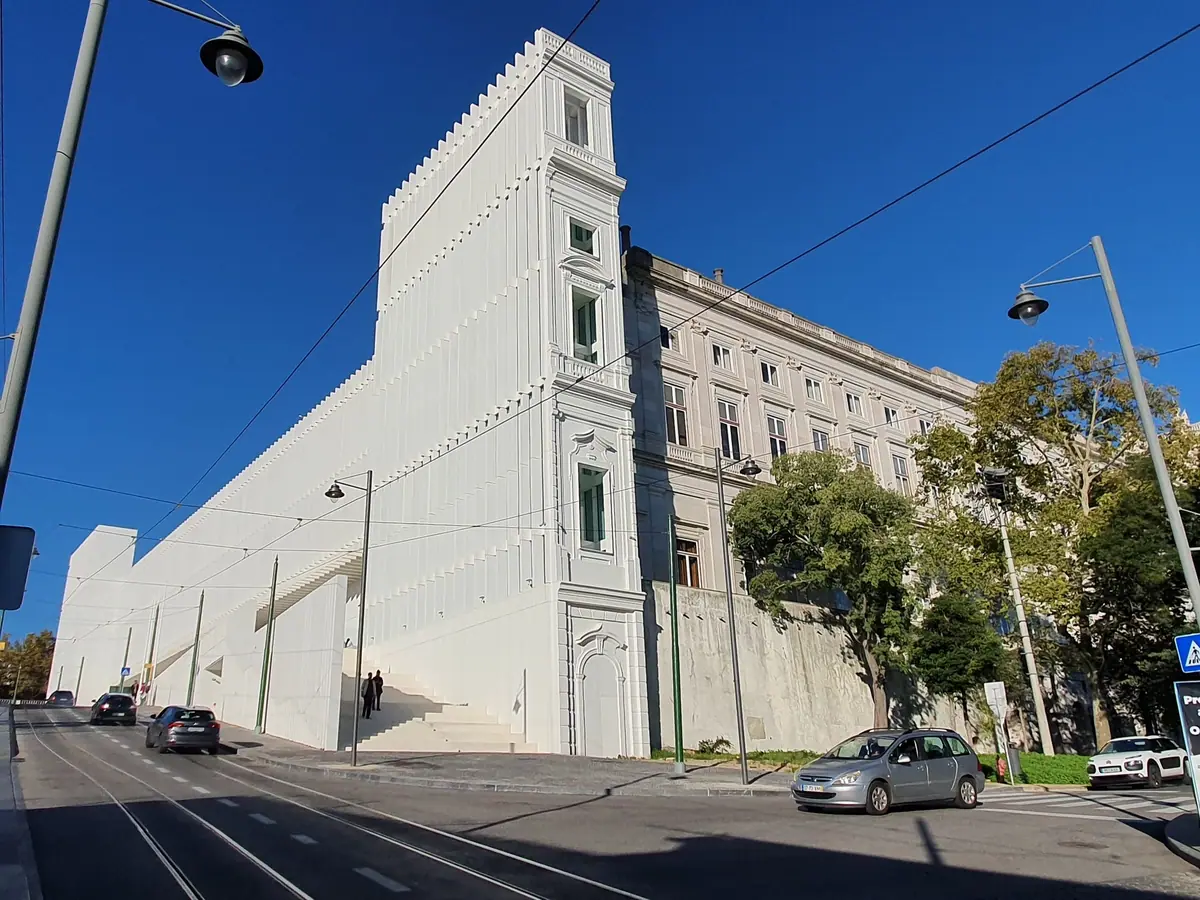 Royal Treasure Museum → Up the hill in the Ajuda palace. Bus 729, which stops by the coach museum, climbs the Calçada da Ajuda. Open every day except 25 December and 1 January.
€11
Card and combos
Lisboa Card options
Pick the one that fits your trip. Prices are per adult, and you choose your dates on the next page.


Tickets
Popular tickets around Lisbon
The ones other visitors book most.


